🎨 Origin of Oil Painting: History, Process, Types & Famous Brands
Oil paint is one of the most important materials in the history of art. From classical masterpieces to modern paintings, it has remained a favorite medium for artists because of its richness, durability, and versatility.
🏛️ Origin of Oil Paint
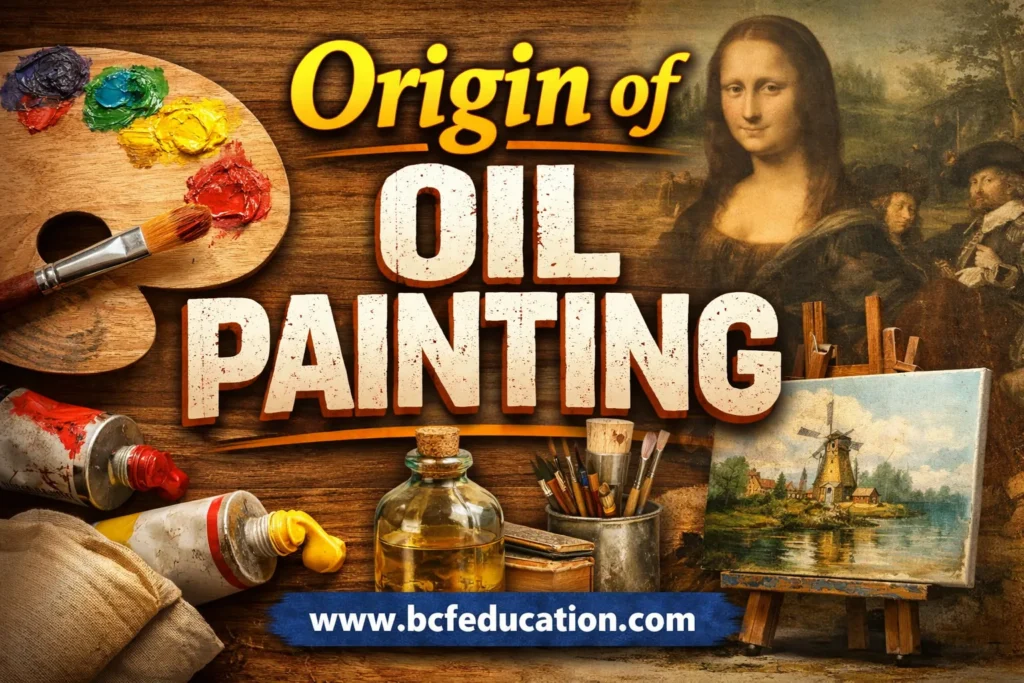
The origin of oil painting dates back many centuries. Early forms of oil-based paints were used in Central Asia (around the 7th century), particularly in Buddhist murals.
However, oil painting became widely known and perfected in Europe during the 15th century. The technique was refined by the famous artist
Jan van Eyck, who is often credited with developing and popularizing oil painting methods.
During the Renaissance period, artists like
Leonardo da Vinci and
Rembrandt van Rijn used oil paints to create highly detailed and realistic artworks.
Table of Contents
🎨 What is Oil Paint?
Oil paint is made by mixing pigments (color particles) with drying oils. These oils bind the pigment together and allow the paint to dry slowly, giving artists more time to blend and work on details.
⚙️ How Oil Paint is Made (Step-by-Step Process)
The process of making oil paint involves several stages:
1. Pigment Selection
- Natural or synthetic pigments are chosen.
- These provide the color (e.g., red, blue, yellow).
2. Grinding the Pigment
- Pigments are ground into a fine powder.
- This ensures smooth texture and even color.
3. Mixing with Oil
- The pigment powder is mixed with oil (usually linseed oil).
- This creates a thick paste.
4. Milling Process
- The mixture is processed using machines or rollers.
- This improves consistency and smoothness.
5. Packaging
- The final paint is packed into tubes or containers.
🧪 Types of Oils Used in Oil Paint
Different oils affect drying time, color, and finish:
🔹 1. Linseed Oil (Most Common)
- Extracted from flax seeds
- Dries fast
- Gives strong, durable film
- Slight yellow tint over time
🔹 2. Walnut Oil
- Slower drying
- Less yellowing
- Produces smooth, glossy finish
🔹 3. Poppy Seed Oil
- Very slow drying
- Ideal for light colors
- Less prone to yellowing
🔹 4. Safflower Oil
- Used in white and pale colors
- Resists yellowing
- Slower drying time
🌍 Why Oil Paint Became Famous
Oil paint became popular because:
- 🎯 Slow drying time allows blending and corrections
- 🎨 Rich colors and depth
- 💪 Durability (paintings last for centuries)
- ✨ Versatility (used on canvas, wood, etc.)
Famous artworks like the
Mona Lisa
and
The Night Watch
were created using oil paints.
🏭 Famous Oil Paint Brands
Here are some well-known oil paint brands used by artists worldwide:
🎨 1. Winsor & Newton
- High-quality professional paints
- Wide range of colors
🎨 2. Gamblin
- Artist-grade paints
- Known for purity and consistency
🎨 3. Old Holland
- One of the oldest brands
- Rich, traditional pigments
🎨 4. Rembrandt Oil Colours
- Premium quality
- Excellent color strength
🎨 5. Daler-Rowney
- Affordable and student-friendly
🧵 Types of Oil Paint (Based on Use)
🔹 Student Grade
- Less pigment, more affordable
- Good for beginners
🔹 Artist/Professional Grade
- High pigment concentration
- Better color quality and durability
🎨 Complete List of Oil Paint Color Names
Oil paint colors are usually grouped into families based on hue. Below is a comprehensive list used by artists worldwide.
🔴 1. Red Colors
- Alizarin Crimson
- Cadmium Red Light
- Cadmium Red Medium
- Cadmium Red Deep
- Carmine
- Crimson Lake
- Vermilion
- Scarlet Lake
- Indian Red
- Venetian Red
- Red Ochre
- Quinacridone Red
- Naphthol Red
- Pyrrole Red
- Permanent Rose
🟠 2. Orange Colors
- Cadmium Orange
- Cadmium Orange Deep
- Chrome Orange
- Transparent Orange
- Mars Orange
- Pyrrole Orange
- Burnt Orange
🟡 3. Yellow Colors
- Cadmium Yellow Light
- Cadmium Yellow Medium
- Cadmium Yellow Deep
- Lemon Yellow
- Naples Yellow
- Yellow Ochre
- Raw Sienna
- Indian Yellow
- Hansa Yellow
- Aureolin
- Bismuth Yellow
- Nickel Titanate Yellow
🟢 4. Green Colors
- Viridian
- Sap Green
- Hooker’s Green
- Olive Green
- Emerald Green
- Chromium Oxide Green
- Permanent Green Light
- Permanent Green Deep
- Terre Verte
- Phthalo Green (Blue Shade)
- Phthalo Green (Yellow Shade)
🔵 5. Blue Colors
- Ultramarine Blue
- French Ultramarine
- Cobalt Blue
- Cerulean Blue
- Prussian Blue
- Phthalo Blue
- Indigo
- Manganese Blue
- Antwerp Blue
- Royal Blue
- Teal Blue
🟣 6. Purple & Violet Colors
- Dioxazine Purple
- Cobalt Violet
- Manganese Violet
- Ultramarine Violet
- Quinacridone Violet
- Tyrian Purple
🟤 7. Brown & Earth Colors
- Burnt Sienna
- Raw Sienna
- Burnt Umber
- Raw Umber
- Van Dyke Brown
- Sepia
- Cassel Earth
- Mars Brown
- Transparent Brown Oxide
⚫ 8. Black Colors
- Ivory Black
- Lamp Black
- Mars Black
- Bone Black
- Carbon Black
⚪ 9. White Colors
Mixing White
Titanium White
Zinc White
Flake White (Lead White)