

Claude Monet and His Paintings of the Pond (Water Lilies)
Introduction
Claude Monet was one of the most influential painters of the Impressionist movement in the 19th and early 20th centuries. He is especially famous for his paintings of water lilies and the pond in his garden. These paintings, often known as the Water Lilies series, became some of the most celebrated artworks in the history of modern art.
Monet spent many years painting the reflections of water, plants, and clouds on the surface of a pond near his home. Through these works, he explored changing light, color, and atmosphere. His pond paintings are admired for their beauty, emotional depth, and innovative painting techniques.
Table of Contents
The Pond That Inspired Monet
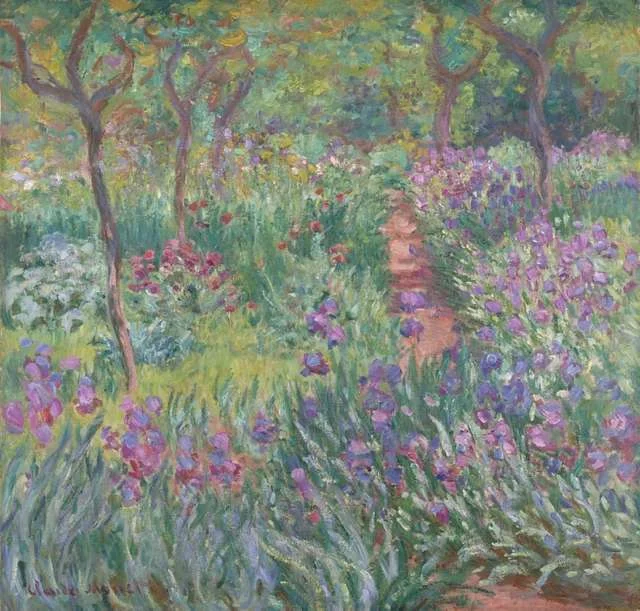
The pond that appears in Monet’s paintings was located at his home in **Giverny, a small village in northern **France. Monet moved to this village in 1883 and later bought the property in 1890.
In 1893, Monet purchased additional land near his house and decided to create a special water garden. He diverted water from a branch of the Epte River to form a pond filled with water lilies.
The pond was surrounded by:
- Bamboo plants
- Weeping willow trees
- Japanese maples
- Exotic flowers
- A curved Japanese-style bridge
Monet designed the garden not only for beauty but also as a source of artistic inspiration. He once explained that he wanted the garden “for the pleasure of the eye and for subjects to paint.”
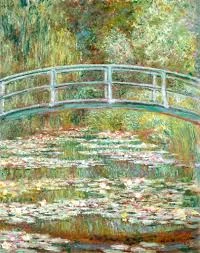
The Water Lily Pond Paintings
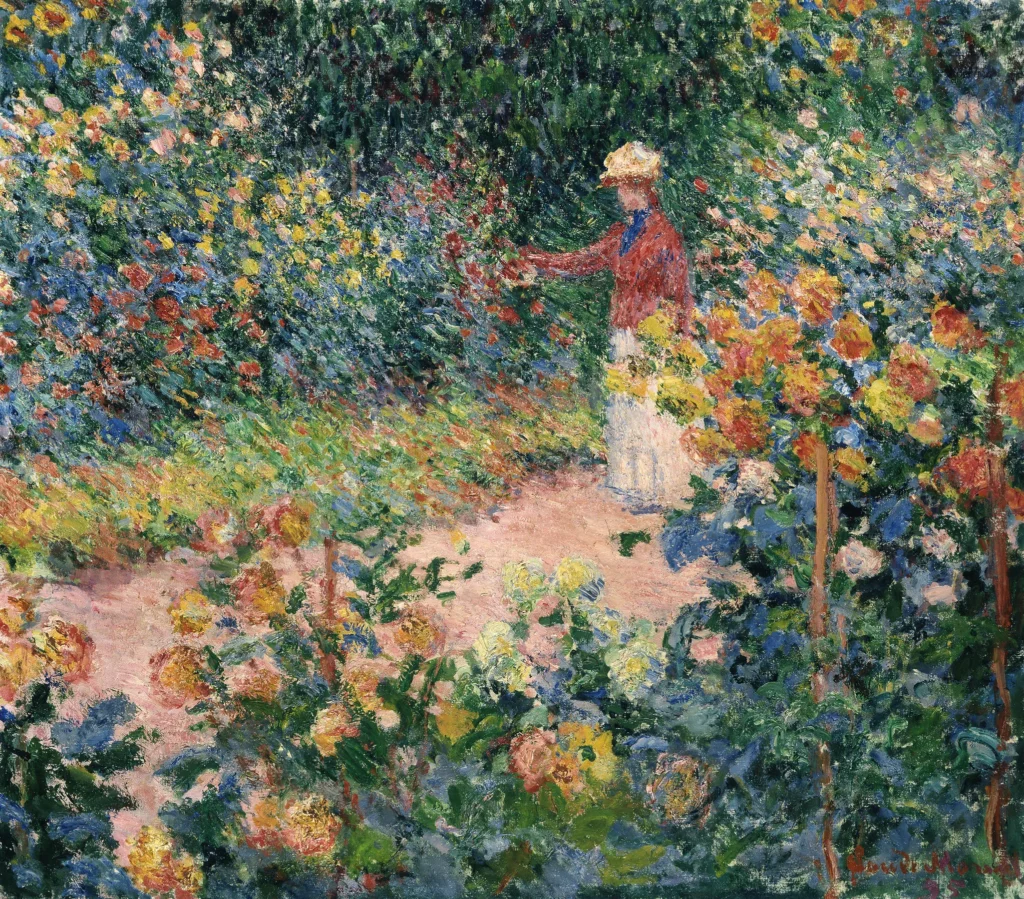
One of Monet’s most famous paintings from this garden is The Water-Lily Pond, created around 1899. The painting shows a curved green bridge over a pond filled with floating water lilies.
In this artwork:
- The bridge crosses the entire painting.
- Water lilies float across the surface.
- Reflections of trees appear in the water.
- The colors blend softly, creating a peaceful and dreamlike scene.
The pond and its lilies became Monet’s main artistic subject. Over the next decades, he painted around 250 paintings of this pond and its changing reflections.
These paintings focused on different elements:
- Reflections of clouds
- Sunlight on water
- Seasonal changes
- Colors of the lilies and surrounding plants
Materials and Techniques Used by Monet
Monet used traditional painting materials but applied them in innovative ways.
1. Medium
Most of the pond paintings were made using oil paint.
2. Surface
The paintings were created on linen canvas, often pre-primed before painting.
3. Painting Technique
Monet used several techniques, including:
- Layered brushstrokes
- Wet-over-dry paint applications
- Thick textured paint surfaces
These methods allowed him to capture light reflections and movement on the water’s surface.
4. Color Palette
He used vibrant natural colors such as:
- Greens for leaves and plants
- Blues and purples for water reflections
- Pink and white for water lilies
- Yellow highlights to show sunlight
His loose brushstrokes helped create the shimmering effect of water.
Artistic Meaning of the Pond Paintings
Monet’s pond paintings were not simply landscape paintings. They represented a new way of seeing nature.
Instead of painting distant scenery, Monet focused closely on the surface of the water and its reflections. In many works, the horizon disappears, and viewers see only water, flowers, and reflections.
This technique made the paintings feel almost abstract, influencing later modern artists.
Art historians often describe Monet’s late pond paintings as a bridge between Impressionism and modern abstract art.
Where Monet’s Pond Paintings Are Located Today
Today, Monet’s water lily paintings are displayed in many famous museums around the world.
Some important locations include:
- Musée de l’Orangerie in Paris, where large Water Lily panels surround visitors in oval rooms.
- The Metropolitan Museum of Art in New York.
- The Art Institute of Chicago.
- Museum of Modern Art in New York.
The original garden and pond at Giverny are also preserved and open to visitors.
Importance and Legacy
Monet’s pond paintings are considered masterpieces of Impressionist art. They changed the way artists approached landscape painting and inspired future generations of painters.
Today, these artworks are among the most famous and valuable paintings in the world. Their calm atmosphere and beautiful colors continue to attract millions of viewers.
Conclusion
The pond paintings of Claude Monet represent a lifelong exploration of nature, light, and reflection. Created in the peaceful garden of Giverny, these works transformed a simple pond into one of the most iconic subjects in art history.
Using oil paint on canvas, layered brushstrokes, and vibrant colors, Monet captured the changing beauty of water lilies and reflections. His paintings of the pond remain timeless symbols of artistic innovation and the beauty of nature.
/