Mercedes-Benz: History, Legacy, and Its Products
Introduction
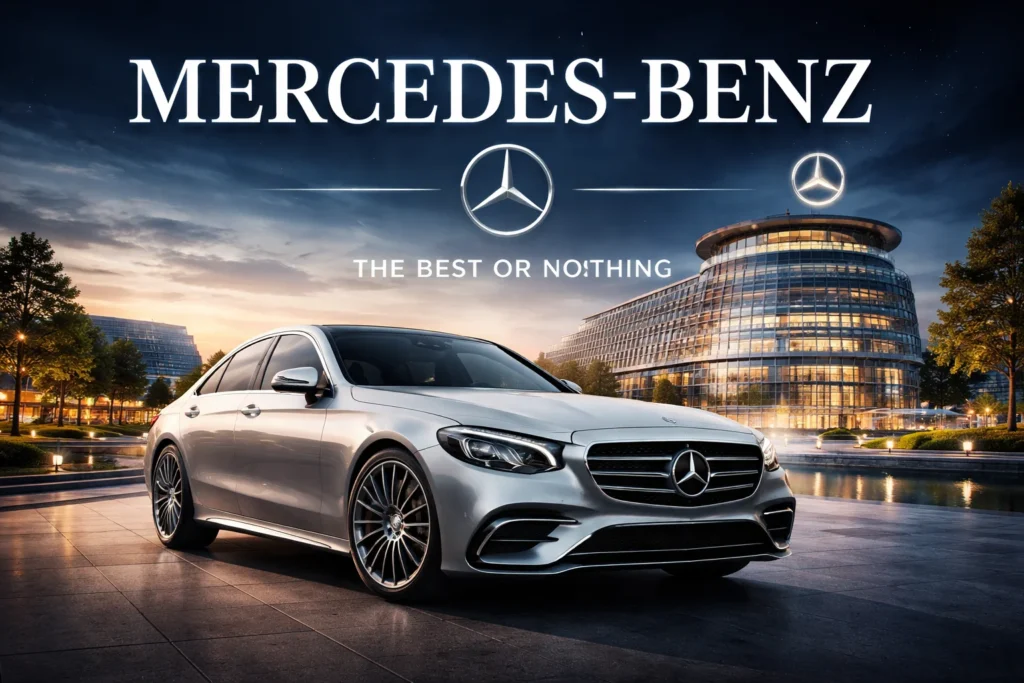
Mercedes-Benz is one of the world’s most prestigious and influential automobile manufacturers. Renowned for luxury, engineering excellence, safety innovation, and performance, the brand has played a foundational role in the history of the automobile itself. Headquartered in Stuttgart, Germany, Mercedes-Benz is a symbol of premium quality and technological leadership in the global automotive industry.
Karl Benz
I was born on November 25, 1844, in Karlsruhe, Germany. My father was a locomotive driver, and from him I inherited a deep interest in machines and engineering. Sadly, I lost him when I was only two years old, but my mother played a decisive role in my life. She believed strongly in education and supported my passion for science and mechanics.
From an early age, I showed great interest in engineering. I studied mechanical engineering at the Karlsruhe Polytechnic at the young age of fifteen. My student years were filled with curiosity, discipline, and determination, but my professional life after graduation was full of hardship. Many of my early business ventures failed, and I faced severe financial difficulties. There were times when my inventions were dismissed, and I struggled to survive.
During these difficult years, my wife Bertha Benz stood firmly by my side. Her faith in my work gave me strength when I was close to giving up. In 1885, after years of experimentation, I finally succeeded in inventing the Benz Patent-Motorwagen, the world’s first practical automobile powered by an internal combustion engine. In 1886, I officially patented my invention, marking the birth of the modern automobile.
My invention did not receive immediate recognition. However, Bertha made history in 1888 by undertaking the first long-distance automobile journey without my prior knowledge. Her journey proved the reliability of my motor vehicle and brought widespread public attention to my work. This event changed the future of transportation forever.
In 1883, I founded Benz & Cie., which later became the world’s largest automobile manufacturer. Over time, my automobiles gained acceptance, and my lifelong dream of self-propelled vehicles became a reality. In 1926, my company merged with Gottlieb Daimler’s firm to form Daimler-Benz, known today as Mercedes-Benz.
I lived to see my invention transform society, revolutionize transportation, and shape the modern world. I passed away on April 4, 1929, but my legacy continues every time an automobile moves on the road. I believe my greatest achievement was not just inventing a machine, but opening a new path for human progress.
History and Origins of Mercedes-Benz
Birth of the Automobile
The origins of Mercedes-Benz date back to the late 19th century. In 1886, Karl Benz invented the world’s first gasoline-powered automobile, the Benz Patent-Motorwagen. At the same time, Gottlieb Daimler and Wilhelm Maybach were independently developing advanced internal combustion engines in Germany.
Formation of Mercedes-Benz
In 1926, the companies Benz & Cie. and Daimler-Motoren-Gesellschaft (DMG) merged to form Daimler-Benz AG, and the brand name Mercedes-Benz was officially adopted. The name “Mercedes” came from Mercedes Jellinek, the daughter of an early DMG customer and automobile enthusiast.
Growth and Global Recognition
Throughout the 20th century, Mercedes-Benz became known for:
- Engineering precision
- Innovation in vehicle safety
- Luxury and comfort
- Strong motorsport heritage
The company introduced numerous automotive firsts, including airbags, anti-lock braking systems (ABS), crumple zones, and electronic stability control.
Mercedes-Benz Today
Mercedes-Benz operates under Mercedes-Benz Group AG and produces vehicles across multiple segments, including luxury sedans, SUVs, sports cars, electric vehicles, and commercial transport. The brand also leads the premium electric mobility transition through its EQ lineup.
Mercedes-Benz Product Portfolio: Detailed Overview
Mercedes-Benz vehicles are broadly divided into passenger cars, SUVs, electric vehicles, performance cars (AMG), and commercial vehicles.
1. Mercedes-Benz Sedans and Saloons
A-Class Sedan
Category: Entry-level luxury sedan
- Compact design and modern interior
- Advanced infotainment system (MBUX)
- Efficient engines and urban-friendly size
Target Market: Young professionals and first-time luxury buyers
C-Class
Category: Mid-size luxury sedan
- Known as the “baby S-Class” due to its premium features
- High-quality interior materials
- Strong balance of performance and comfort
Significance: One of Mercedes-Benz’s best-selling models worldwide
E-Class
Category: Executive luxury sedan
- Advanced driver assistance systems
- Comfortable ride quality
- Used widely as executive and business vehicles
Strength: Innovation and long-distance comfort
S-Class
Category: Flagship luxury sedan
- Benchmark for luxury and technology
- Features like adaptive suspension, advanced safety systems, and rear-seat luxury
- Introduces technologies later adopted across the industry
Reputation: Considered one of the finest luxury cars ever made
2. Mercedes-Benz SUVs (G-Series and GLS Range)
GLA
Category: Compact luxury SUV
- Sporty design
- Suitable for urban driving
- Efficient yet premium
GLC
Category: Mid-size luxury SUV
- Comfortable family vehicle
- Strong engine options
- Popular globally due to versatility
GLE
Category: Full-size luxury SUV
- Spacious interior
- Advanced suspension technology
- High towing capability
GLS
Category: Luxury full-size SUV
- Often referred to as the “S-Class of SUVs”
- Premium interior with three-row seating
- Ideal for luxury family transport
G-Class (G-Wagon)
Category: Luxury off-road SUV
- Iconic boxy design
- Exceptional off-road capability
- Combines rugged performance with luxury
3. Mercedes-Benz Coupes, Convertibles, and Sports Cars
CLA and CLS
- Four-door coupe styling
- Sporty appearance with luxury interiors
SL Roadster
Category: Luxury sports convertible
- Long-standing heritage
- Powerful engines
- Open-top driving experience
AMG GT
Category: High-performance sports car
- Developed by Mercedes-AMG
- Track-focused performance
- Competes with global supercars
4. Mercedes-AMG Performance Vehicles
Mercedes-AMG is the performance division of Mercedes-Benz.
Key Characteristics:
- Handcrafted high-performance engines
- Sport-tuned suspension and braking
- Aggressive styling
Popular AMG Models:
- AMG C 63
- AMG E 63
- AMG G 63
- AMG GT Series
Purpose: Performance, motorsport-inspired driving, and exclusivity
5. Mercedes-Benz Electric Vehicles (EQ Line)
Mercedes-Benz’s electric mobility division is branded as EQ.
EQA
Category: Compact electric SUV
- Entry-level electric Mercedes
- Efficient and modern design
EQB
Category: Electric family SUV
- Optional third-row seating
- Practical electric vehicle
EQC
Category: Mid-size electric SUV
- Luxury electric driving experience
- Quiet and smooth performance
EQE and EQS
Category: Electric luxury sedans
- EQS is the electric equivalent of the S-Class
- Long range and cutting-edge digital interiors
- Aerodynamic design
6. Mercedes-Benz Commercial Vehicles
Vans and Transport
- Sprinter
- Vito
- V-Class (luxury van)
Used for logistics, business transport, and premium passenger travel.
Trucks and Buses (Daimler Truck)
Mercedes-Benz is also a global leader in:
- Heavy-duty trucks
- Public transport buses
- Freight and logistics solutions
Innovation and Safety Leadership
Mercedes-Benz has introduced many groundbreaking safety technologies, including:
- Airbags
- Anti-lock braking system (ABS)
- Adaptive cruise control
- Lane-keeping assist
- Advanced autonomous driving research
Safety is a core value of the brand.
Mercedes-Benz is not merely an automobile manufacturer; it is the creator of the automobile and a continuing leader in luxury, safety, and innovation. With a diverse product range spanning compact cars, luxury sedans, SUVs, electric vehicles, performance models, and commercial transport, Mercedes-Benz successfully caters to a global audience while maintaining its premium identity.
By combining tradition with cutting-edge technology, Mercedes-Benz remains a benchmark in the automotive world and continues to shape the future of mobility.
Mercedes-Benz vs Tesla: A Detailed Comparison
Mercedes-Benz and Tesla are two of the most influential automobile companies in the world, but they represent very different philosophies. Mercedes-Benz stands for heritage, luxury, and engineering excellence built over more than a century, while Tesla represents innovation, disruption, and a software-driven electric future. This comparison highlights how both companies compete and differ across key areas.
1. Company Background
| Aspect | Mercedes-Benz | Tesla |
|---|---|---|
| Founded | 1926 (roots in 1886) | 2003 |
| Country | Germany | United States |
| Founder(s) | Karl Benz, Gottlieb Daimler | Martin Eberhard, Marc Tarpenning |
| Key Figure | Long engineering legacy | Elon Musk (CEO) |
| Core Identity | Luxury, safety, tradition | Innovation, sustainability, technology |
2. Core Business Focus
Mercedes-Benz
- Produces petrol, diesel, hybrid, and electric vehicles
- Strong emphasis on luxury, comfort, and craftsmanship
- Gradual transition toward electrification
Tesla
- Produces only electric vehicles
- Focuses on sustainability and renewable energy
- Software-centric approach to automobiles
3. Product Range Comparison
Vehicle Portfolio
| Segment | Mercedes-Benz | Tesla |
|---|---|---|
| Entry-level cars | A-Class, CLA | Model 3 |
| Luxury sedans | C-Class, E-Class, S-Class | Model S |
| SUVs | GLA, GLC, GLE, GLS, G-Class | Model Y, Model X |
| Sports cars | AMG GT, SL | Roadster (upcoming) |
| Electric vehicles | EQ series (EQA, EQB, EQE, EQS) | All models are electric |
| Trucks | Commercial trucks, buses | Tesla Semi |
| Pickup trucks | None | Cybertruck |
4. Electric Vehicle Strategy
Mercedes-Benz
- Electric models branded under EQ
- Combines luxury with electric mobility
- Focuses on comfort, interior quality, and premium design
Tesla
- 100% electric from inception
- Industry leader in EV range, battery efficiency, and charging infrastructure
- Strong integration of hardware and software
Winner in EV Leadership: Tesla
5. Technology and Software
| Area | Mercedes-Benz | Tesla |
|---|---|---|
| Infotainment | MBUX system | Tesla OS |
| Software updates | Limited OTA | Full OTA updates |
| Autonomous driving | Advanced driver assistance | Autopilot & Full Self-Driving |
| User interface | Premium and refined | Minimalist and digital |
Key Difference:
Tesla treats cars like smartphones with frequent updates, while Mercedes focuses on refined, luxury-oriented technology.
6. Performance and Driving Experience
Mercedes-Benz
- Smooth, comfortable, and refined ride
- AMG models offer extreme performance
- Strong focus on driving comfort and stability
Tesla
- Instant acceleration due to electric motors
- Industry-leading straight-line performance
- Less emphasis on traditional driving feel
Performance Verdict:
- Comfort & Handling: Mercedes-Benz
- Acceleration & Speed: Tesla
7. Safety and Engineering
Mercedes-Benz
- Pioneer of automotive safety
- Invented airbags, ABS, and crumple zones
- Conservative and highly tested safety approach
Tesla
- High safety ratings due to EV structure
- Advanced driver-assistance systems
- Relies heavily on software and AI
Safety Leadership: Mercedes-Benz (historical and engineering depth)
8. Manufacturing and Sales Model
| Aspect | Mercedes-Benz | Tesla |
|---|---|---|
| Manufacturing | Traditional global plants | Gigafactories |
| Sales model | Dealerships | Direct-to-consumer |
| Customization | Extensive options | Limited options |
9. Sustainability and Energy Ecosystem
Mercedes-Benz
- Moving toward carbon-neutral production
- Focused mainly on vehicles
Tesla
- Operates beyond cars
- Products include solar panels, Solar Roof, Powerwall, and Megapack
- Complete clean-energy ecosystem
Sustainability Winner: Tesla
10. Brand Image and Customer Base
| Factor | Mercedes-Benz | Tesla |
|---|---|---|
| Brand perception | Prestige, luxury, heritage | Innovation, futurism |
| Typical customer | Executives, luxury buyers | Tech-savvy, eco-conscious buyers |
| Global legacy | Over 100 years | Rapid modern growth |
11. Pricing and Affordability
Mercedes-Benz
- Broad price range
- Entry-level to ultra-luxury
Tesla
- Mid-range to premium pricing
- Fewer customization choices
Mercedes-Benz and Tesla represent two different eras of the automotive world. Mercedes-Benz excels in luxury, craftsmanship, safety, and tradition, while Tesla dominates in electric mobility, software innovation, and sustainability.
Final Verdict:
- Choose Mercedes-Benz for luxury, comfort, and heritage
- Choose Tesla for electric innovation, technology, and future-ready mobility
Both companies are shaping the future of transportation—one through evolution, the other through disruption.