Rockefeller and the Fine Arts: A Legacy of Art, Patronage, and Cultural Impact
The Rockefeller name is synonymous not only with American business and philanthropy, but also with a deep and enduring engagement with the fine arts. Across four generations, members of the Rockefeller family — notably John D. Rockefeller Jr., Abby Aldrich Rockefeller, Nelson A. Rockefeller, David Rockefeller, and John D. Rockefeller III — established major institutions, built encyclopedic private collections, redefined museum culture, and helped shape the cultural landscape of the United States and beyond.
I. The Roots of Rockefeller Art Patronage
The Rockefeller family’s involvement with art began in the late 19th and early 20th centuries, rooted in the wealth generated by John D. Rockefeller Sr.’s Standard Oil fortune. While Rockefeller Sr. himself was not primarily known as an art collector, his children — especially his son John D. Rockefeller Jr. and daughter-in-law Abby Aldrich Rockefeller — cultivated a passion for art that transformed private collecting into public cultural legacy.
II. Abby Aldrich Rockefeller and the Founding of MoMA
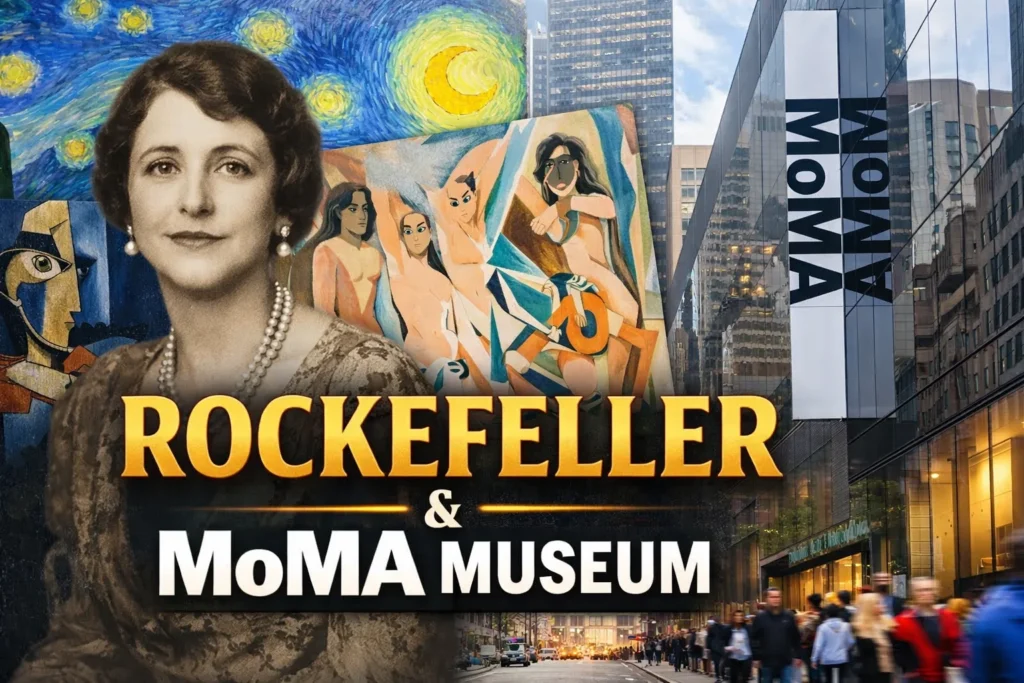
One of the most pivotal moments in American art history is the founding of the Museum of Modern Art (MoMA) in New York in 1929 — an institution that would become the leading showcase for 20th-century art. Abby Aldrich Rockefeller was a principal founder of MoMA, alongside others such as Lillie P. Bliss and Mary Quinn Sullivan. At a time when modern and avant-garde art was often controversial or dismissed, Abby’s vision embraced Impressionism, Post-Impressionism, and early Modernism — helping legitimize these movements within the United States.
Her collecting tastes — adventurous for the era — played a major role in expanding American appreciation of contemporary European and American works.
III. The Rockefeller Family Collection: A Personal and Public Treasure
While much of the Rockefeller family’s art was held privately, their collective holdings became one of the most remarkable private collections of the 20th and early 21st centuries.
Abby Aldrich Rockefeller and Her Role in the Success of Museum of Modern Art
Abby Aldrich Rockefeller was not just a founder of MoMA — she was its emotional force, early risk-taker, and cultural visionary. Without her courage and commitment, the Museum of Modern Art might never have existed, and modern art in America may have developed very differently.
Here is a detailed look at her role in MoMA’s success.
1️⃣ The Woman Who Believed in Modern Art When America Didn’t
In the 1920s, modern art was controversial in the United States. Paintings by artists like Picasso and Van Gogh were often mocked. Most major museums preferred classical European works.
Abby Rockefeller believed something different.
She saw modern art as the future — bold, emotional, innovative, and intellectually powerful. At a time when even her husband, John D. Rockefeller Jr., was skeptical about modern art, Abby quietly but firmly supported it.
Her belief was not based on fashion. It was based on conviction.
2️⃣ Co-Founder of MoMA (1929)
In 1929, Abby partnered with two other art patrons — Lillie P. Bliss and Mary Quinn Sullivan — to establish a museum devoted entirely to modern art.
This was revolutionary.
MoMA began in rented office rooms in Manhattan, just days after the stock market crash. The timing was risky. The economy was collapsing. But Abby did not hesitate.
Her social position, financial influence, and determination helped make the project credible.
Without her name and backing, investors and trustees might never have supported the idea.
3️⃣ Financial and Social Support
Although Abby personally loved modern art, her husband initially disapproved of spending Rockefeller funds on it. She often used her own resources and influence to support the museum in its early years.
Her role included:
- Recruiting trustees and donors
- Encouraging wealthy families to support modern art
- Lending artworks from private collections
- Hosting gatherings that connected artists, collectors, and intellectuals
Her social network became MoMA’s foundation.
4️⃣ Championing New Artists
Abby was not interested in safe choices. She supported emerging artists and experimental work.
She believed art should reflect the modern world — its emotions, struggles, and creativity.
Because of her influence, MoMA:
- Acquired important modern works early
- Took risks on living artists
- Treated modern art seriously rather than as a trend
Her taste helped shape MoMA’s early collection strategy.
5️⃣ Creating Cultural Legitimacy
At the time, modern art was seen by many Americans as strange or even “un-American.” Abby used her social status to normalize it.
As a Rockefeller, her support gave modern art cultural legitimacy. If someone from one of America’s most respected families believed in it, others began to reconsider.
She helped transform modern art from something radical into something respectable.
6️⃣ Long-Term Impact After Her Death
Abby passed away in 1948, but her impact continued.
Her son, Nelson Rockefeller, and later generations of the Rockefeller family continued supporting art institutions. The Rockefeller name became permanently linked with cultural patronage.
MoMA grew into the world’s leading modern art museum — but its foundation was Abby’s courage.
🌟 Why Abby Rockefeller Was So Important
MoMA’s success was not only about money or collections. It was about vision.
Abby Rockefeller provided:
- Emotional commitment
- Financial risk-taking
- Social influence
- Cultural courage
She believed modern art mattered when most of society doubted it.
Today, millions visit MoMA each year. They see masterpieces, attend exhibitions, and study art history. That global influence began with one woman willing to stand behind new ideas.
A. David and Peggy Rockefeller’s Encyclopedic Collection
The late David Rockefeller — the youngest grandson of John D. Rockefeller Sr. — and his wife Peggy built one of the most ambitious private art collections of the 20th century. Their collection was described as “virtually encyclopedic,” spanning styles, cultures, and centuries.
Highlights included:
- European masterpieces – Works by artists such as Pablo Picasso, Henri Matisse, Claude Monet, Georges Seurat, and Paul Gauguin.
- American art – A broad survey of 20th-century American painting and sculpture from figures like Edward Hopper, Georgia O’Keeffe, and others.
- Decorative arts and furniture – Outstanding European furniture, ceramics, and decorative objects that spanned eras and styles.
- Asian and cultural arts – Works from Asia, including significant collections assembled by John D. Rockefeller III and Blanchette Rockefeller, later housed at institutions like the Asia Society.
In addition to their personal collecting, David Rockefeller published a monumental, multi-volume catalogue of their art holdings titled The David and Peggy Rockefeller Collection, chronicling works across continents and artistic traditions.
Prior to their deaths, they announced that much of this collection would be sold at auction — with all proceeds directed to philanthropic causes including universities, museums, and cultural organizations that the family supported.
IV. Indigenous and Cultural Art
Another significant facet of Rockefeller collecting was engagement with Native American and non-Western art forms.
A. Native American Art
Starting in the 1920s and 1930s, John D. Rockefeller Jr. and Abby Aldrich Rockefeller amassed a significant collection of Native American works — textiles, beadwork, pottery, watercolors, and basketry — primarily through travels in the American West. Much of this collection later passed to David and Peggy Rockefeller and was displayed at the family’s Maine retreat. In 2018, 52 works from this collection were gifted to the Museum of Fine Arts, Boston, enriching the institution’s holdings of American and Indigenous art.
V. The Rockefeller Influence on Museums and Collections
A. The Metropolitan Museum of Art’s Michael C. Rockefeller Wing
Nelson A. Rockefeller — governor of New York and later vice president of the United States — was a key collector and champion of non-Western art long before many American museums embraced these traditions. In 1957, he founded the Museum of Primitive Art, which collected significant African, Oceanic, and Indigenous American works that were considered ethnographic at the time.
In 1969, Rockefeller’s collection was transferred to the Metropolitan Museum of Art, forming the basis for what became the Michael C. Rockefeller Wing (named after his tragically lost son, an avid collector of Pacific art). This wing, first opened in 1982 and significantly revamped in 2025, houses extensive collections of African, ancient American, and Oceanic art, helping reshape how global art traditions are interpreted in America.
VI. Rockefeller Spaces as Art Venues
A. Rockefeller Center (New York)
The Rockefeller Center complex itself — beyond its role in business and media — functions as an open-air gallery of public art. Sculptures, murals, and architectural ornamentation by leading artists of the Art Deco era are integrated throughout the complex. One of its most iconic works is Prometheus, a monumental gilded bronze sculpture that serves as a symbolic heart of the plaza.
Additionally, the center’s Art Production Fund commissions contemporary public art installations, continuing the Rockefellers’ tradition of supporting and showcasing art in dynamic spaces.
VII. A Legacy Woven into Cultural Institutions
The Rockefeller family’s impact on the arts extends far beyond private collecting. Their patronage helped establish and sustain major cultural institutions, influenced museum practices, expanded public access to global art traditions, and enriched scholarship across artistic fields.
Their approach combined deep personal passion, intellectual engagement with art history, and a philanthropic vision — inviting the public into conversations about art, culture, and history that continue to unfold across museums, galleries, universities, and public spaces around the world.
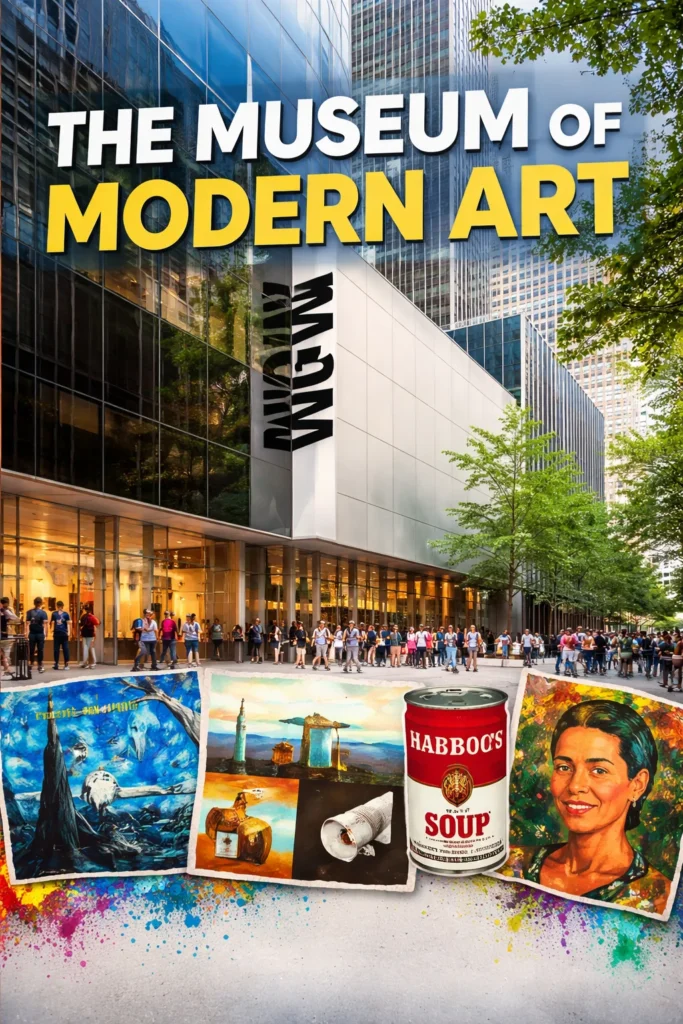
The Museum of Modern Art (MoMA) is one of the most influential art museums in the world. Located in New York City, it changed the way people understand and experience modern and contemporary art. Its journey from a small experimental museum to a global cultural powerhouse is a story of bold vision, risk-taking, and strong leadership.
The Beginning: A Radical Idea (1929)
MoMA was founded in 1929 — just days after the Wall Street Crash — during a time of economic crisis and uncertainty. The idea for the museum came from three determined women:
- Abby Aldrich Rockefeller
- Lillie P. Bliss
- Mary Quinn Sullivan
At that time, modern art was not widely accepted in America. Many people considered it strange, controversial, or even meaningless. But these women believed that artists like Van Gogh, Picasso, and Cézanne represented the future of art.
They wanted to create a museum dedicated entirely to modern art — something that did not exist in the United States.
MoMA first opened in rented rooms in Manhattan with a small exhibition of European modern paintings. It was modest, but the idea was revolutionary.
The Visionary Director: Alfred H. Barr Jr.
The museum’s rapid growth was largely shaped by its first director, Alfred H. Barr Jr.. Appointed at just 27 years old, Barr brought academic structure and bold curatorial thinking to the institution.
He believed modern art should be presented in a clear, historical timeline — showing how movements evolved from Impressionism to Cubism to Surrealism and beyond. His famous diagram mapping modern art movements became iconic in art history.
Barr expanded MoMA beyond painting and sculpture to include:
- Photography
- Film
- Architecture
- Design
- Prints and drawings
This multidisciplinary approach made MoMA unique and forward-thinking.
Growth and Expansion (1930s–1950s)
Despite the Great Depression, MoMA grew rapidly in influence. By the 1930s and 1940s, it was organizing major exhibitions that introduced American audiences to European masters.
During World War II, MoMA helped safeguard and promote modern art. After the war, New York replaced Paris as the center of the art world — and MoMA played a central role in that shift.
The museum moved to its permanent home in Midtown Manhattan in 1939, supported by the Rockefeller family’s funding and philanthropy.
Building a World-Class Collection
MoMA began acquiring masterpieces that would define modern art history. Today, some of its most famous works include:
- The Starry Night by Vincent van Gogh
- Les Demoiselles d’Avignon by Pablo Picasso
These works are not just paintings — they are turning points in art history. By acquiring such pieces early, MoMA positioned itself as the authority on modern art.
The museum also embraced American movements such as Abstract Expressionism, supporting artists who would later become globally important.
Reaching Its Peak Influence (1960s–2000s)
MoMA’s “peak” was not just about visitor numbers — it was about global influence.
By the late 20th century:
- It had one of the largest and most respected modern art collections in the world.
- It became the model for modern art museums internationally.
- Its exhibitions set global art trends.
- It shaped art education and criticism worldwide.
Under the support of patrons like David Rockefeller and other trustees, the museum expanded its building multiple times to accommodate growing collections and audiences.
Major renovations in 2004 and again in 2019 significantly increased gallery space and allowed more diverse and global artists to be displayed.
Why MoMA Became So Powerful
MoMA reached its peak because of several key reasons:
1. Bold Early Vision
It supported modern art when others rejected it.
2. Strong Financial Backing
The Rockefeller family’s long-term support provided stability.
3. Innovative Curatorship
It treated modern art seriously — academically and historically.
4. Expanding Definitions of Art
It embraced photography, film, design, and digital art before many institutions did.
5. Global Influence
Museums worldwide copied its model of organizing and presenting modern art.
MoMA Today
Today, MoMA is not just a museum — it is a global cultural institution. It attracts millions of visitors annually and continues to redefine what modern and contemporary art means.
From a small rented gallery in 1929 to one of the most powerful art institutions in history, MoMA’s journey reflects courage, innovation, and the belief that new ideas in art deserve space, respect, and preservation.
📅 Timeline of MoMA’s Major Exhibitions
1929 – First Exhibition
“Cézanne, Gauguin, Seurat, Van Gogh”
MoMA’s opening exhibition introduced American audiences to Post-Impressionist masters. It immediately established the museum as serious and ambitious.
1936 – Cubism and Abstract Art
Organized by founding director Alfred H. Barr Jr., this groundbreaking show mapped the development of modern art from Cézanne to geometric abstraction.
Barr’s famous flowchart diagram from this exhibition became legendary in art history.
Impact: Defined how modern art would be studied and displayed for decades.
1939–1940 – Picasso: Forty Years of His Art
A massive retrospective of Pablo Picasso.
This exhibition solidified Picasso’s reputation in America and positioned MoMA as the global authority on modern masters.
1946 – Fourteen Americans
Showcased emerging American artists after World War II.
Impact: Helped shift the art world’s center from Paris to New York.
1955 – The Family of Man
Curated by photographer Edward Steichen.
This photography exhibition featured 503 images from 68 countries.
Impact: One of the most visited photography exhibitions in history. It presented photography as a powerful universal art form.
1956 – Modern Art in the United States
A large survey exhibition that traveled internationally.
Impact: Promoted American modern art globally during the Cold War era.
1967 – The Machine as Seen at the End of the Mechanical Age
Explored the relationship between art and technology.
Impact: Proved MoMA was forward-thinking, embracing industrial design and technological themes.
1984 – “Primitivism” in 20th Century Art
Compared modern European artists with African and Oceanic art.
Impact: Highly influential but controversial. Sparked debates about cultural representation and appropriation in museums.
1989 – Picasso and Braque: Pioneering Cubism
A landmark scholarly exhibition examining the birth of Cubism.
Impact: Reaffirmed MoMA’s leadership in modern art research.
2000 – Open Ends
A millennium exhibition focused on contemporary painting.
Impact: Marked MoMA’s commitment to living artists entering the 21st century.
2010 – Marina Abramović: The Artist Is Present
Performance artist Marina Abramović sat silently across from museum visitors for hours each day.
Impact: Became a cultural phenomenon. Redefined performance art’s place in major museums.
2017 – Items: Is Fashion Modern?
Explored 111 fashion items that shaped the 20th and 21st centuries.
Impact: Elevated fashion design as a serious cultural and artistic force.
2019 – Reinstallation After Expansion
Following a major renovation, MoMA reorganized its collection to include more women, artists of color, and global perspectives.
Impact: Marked a new “peak” — shifting from a Euro-centric narrative to a more inclusive global modernism.
🎯 When Did MoMA Reach Its Peak?
MoMA has had multiple “peaks”:
- 1930s–40s: Establishing modern art in America
- 1950s–60s: Shaping global art during the Cold War
- 1980s–90s: Becoming the world’s most authoritative modern art museum
- 2010s–Present: Redefining modern art through diversity, performance, and global inclusion
Rather than one single peak, MoMA’s strength lies in its ability to reinvent itself.