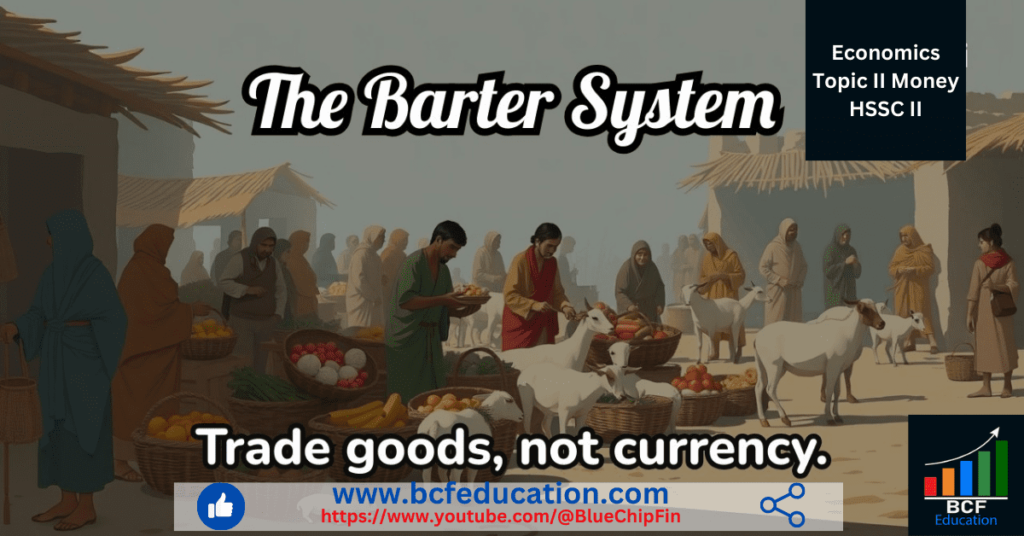

Barter Finance: The Earliest Form of Economic Exchange
Barter finance is the oldest known system of trade, where goods and services are exchanged directly without the use of money. Long before coins, banknotes, or digital payments existed, people relied on barter to meet their daily needs. This system formed the foundation of modern financial systems and played a crucial role in the development of economies and trade networks.
Understanding barter finance helps explain how early human societies conducted trade, developed markets, and eventually created money.
Table of Contents
1. What is Barter Finance?
Barter finance refers to an economic system in which individuals or groups exchange goods or services directly for other goods or services without using currency.
For example:
- A farmer exchanges wheat for a potter’s clay pots.
- A shepherd trades wool for grain.
- A carpenter builds furniture in exchange for food or clothing.
In barter transactions, the value of goods is negotiated between the two parties, and both must agree that the trade is fair.
2. Origin of the Barter System
The barter system existed thousands of years ago in early civilizations such as:
- Mesopotamia
- Ancient Egypt
- Ancient China
In these societies, people produced different goods such as grain, livestock, tools, and textiles. Since money did not yet exist, people exchanged their surplus goods with others who needed them.
For instance:
- Farmers traded crops.
- Hunters exchanged animal skins.
- Craftsmen traded tools and pottery.
Barter made it possible for communities to share resources and survive together.
3. How the Barter System Worked
The barter system depended on mutual agreement and direct exchange.
Step-by-Step Process
- Production of Goods
People produced goods like crops, livestock, or handmade items. - Finding a Trading Partner
Someone who needed those goods and had something valuable to offer. - Negotiation
Both parties negotiated the value of their items. - Exchange
Goods or services were exchanged directly.
Example:
| Person | Has | Wants |
|---|---|---|
| Farmer | Wheat | Shoes |
| Shoemaker | Shoes | Wheat |
They agree to exchange wheat for shoes.
4. Examples of Barter Trade in History
Barter was widely used in ancient trade routes and markets.
1. Local Village Markets
Farmers and craftsmen exchanged goods such as:
- vegetables
- tools
- clothing
- livestock
2. Long-Distance Trade
Major trade routes like the:
- Silk Road
enabled traders to exchange:
- silk
- spices
- gold
- precious stones
- textiles
Merchants traveling between Asia, the Middle East, and Europe often relied on barter when currency systems were different.
5. Advantages of the Barter System
The barter system offered several benefits in early societies.
1. No Need for Money
People could trade directly without coins or currency.
2. Simple System
Transactions were easy to understand because goods were exchanged directly.
3. Encouraged Local Production
People focused on producing goods that others needed.
4. Community Cooperation
Barter encouraged cooperation and social relationships within communities.
6. Problems and Limitations of Barter
Despite its usefulness, barter had many limitations.
1. Double Coincidence of Wants
Both parties had to want what the other person offered.
Example:
A farmer wanting shoes must find a shoemaker who wants wheat.
2. Difficulty in Valuing Goods
Determining fair value between different goods could be difficult.
Example:
How many apples equal one goat?
3. Lack of Standard Units
Without a standard measurement of value, trade became complicated.
4. Storage Problems
Perishable goods like food could not be stored for long.
7. Transition from Barter to Money
Due to the limitations of barter, societies gradually developed money systems.
Economists such as Adam Smith explained that barter eventually led to the creation of money because people needed a common medium of exchange.
Evolution of Exchange Systems
- Barter (goods for goods)
- Commodity money (salt, cattle, metals)
- Metal coins
- Paper currency
- Banking systems
- Digital payments and cryptocurrencies
This evolution made trade faster, easier, and more efficient.
8. Barter in the Modern World
Although money dominates today’s economy, barter still exists in several forms.
1. Business Barter
Companies sometimes exchange services without cash.
Example:
- Advertising space exchanged for products.
2. Online Barter Platforms
Digital platforms allow people to swap goods globally.
3. Crisis Economies
During economic crises or hyperinflation, communities sometimes return to barter.
9. Barter and the Modern Sharing Economy
Barter principles can also be seen in modern systems like:
- skill sharing
- service exchanges
- community trading networks
Examples include exchanging:
- tutoring for graphic design
- gardening for repair work
- photography for marketing services
These systems promote resource efficiency and community collaboration.
10. Importance of Barter in Financial History
Barter finance is important because it:
- Formed the foundation of trade and commerce
- Led to the creation of money
- Helped early civilizations build economic systems
- Encouraged specialization and production
Without barter, the development of modern finance and global trade would have been impossible.
Conclusion
Barter finance represents the beginning of economic exchange in human history. It allowed early societies to trade goods and services before the invention of money. While the system had many limitations, it laid the groundwork for currency, banking, and modern financial markets.