Vincent van Gogh’s Impressionistic Art: Techniques, Bold Colors, and Lasting Impact
Introduction
Vincent van Gogh stands as a defining figure in Western art. Though art historians often label him a Post-Impressionist, his work was deeply shaped by the Impressionist movement. He took their ideas about light and outdoor painting and pushed them into new, emotional territory. This article explores how van Gogh developed his unique approach—focusing on his brushwork, color choices, and the techniques that make his paintings instantly recognizable.
How Impressionism Shaped Van Gogh’s Vision
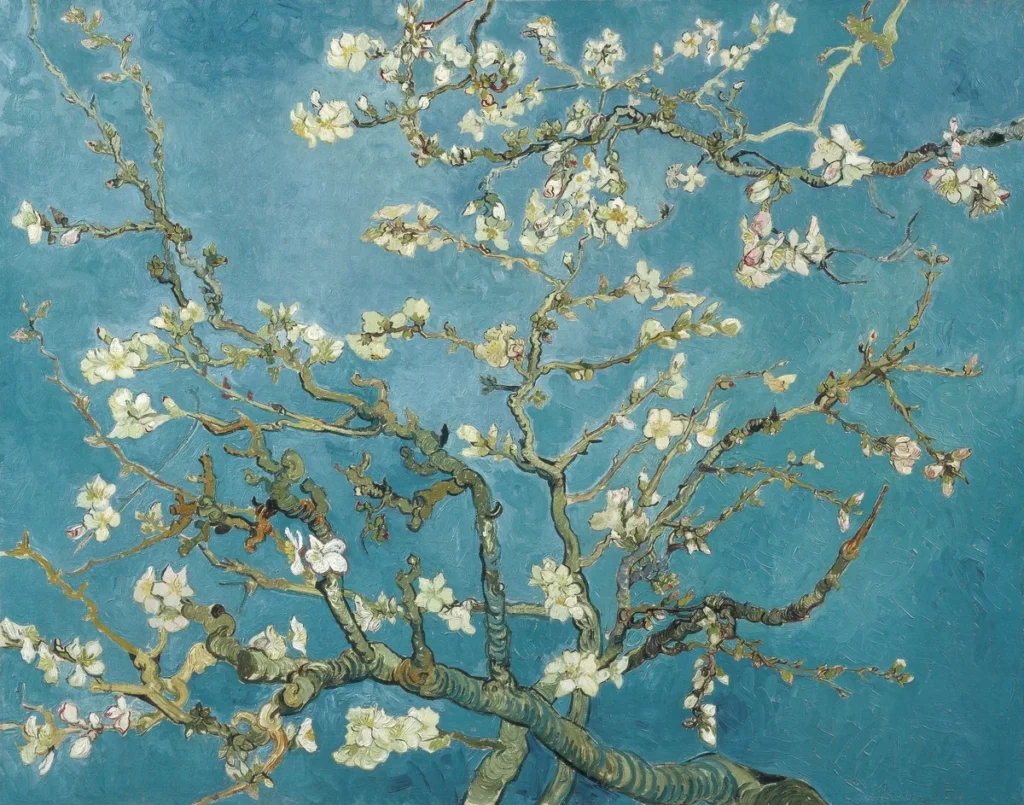
Van Gogh arrived in Paris in 1886 and encountered Impressionism for the first time. He saw the bright palettes of Claude Monet, Camille Pissarro, and Paul Signac. This was a shock to him. Before this period, his own paintings were dark and heavy, using mostly browns and grays, as seen in The Potato Eaters.
The Impressionists taught him to:
- Paint outdoors (en plein air)
- Use lighter, unmixed colors
- Capture fleeting moments of light
However, van Gogh did not simply copy them. He absorbed their lessons but added his own emotional intensity. Where Impressionists painted what their eyes saw, van Gogh painted what he felt. This shift is why he is considered a bridge between Impressionism and modern Expressionism.
Van Gogh’s Signature Painting Techniques
Van Gogh developed a set of techniques that are entirely his own. Below are the most important ones.
1. Impasto: Sculpting with Paint
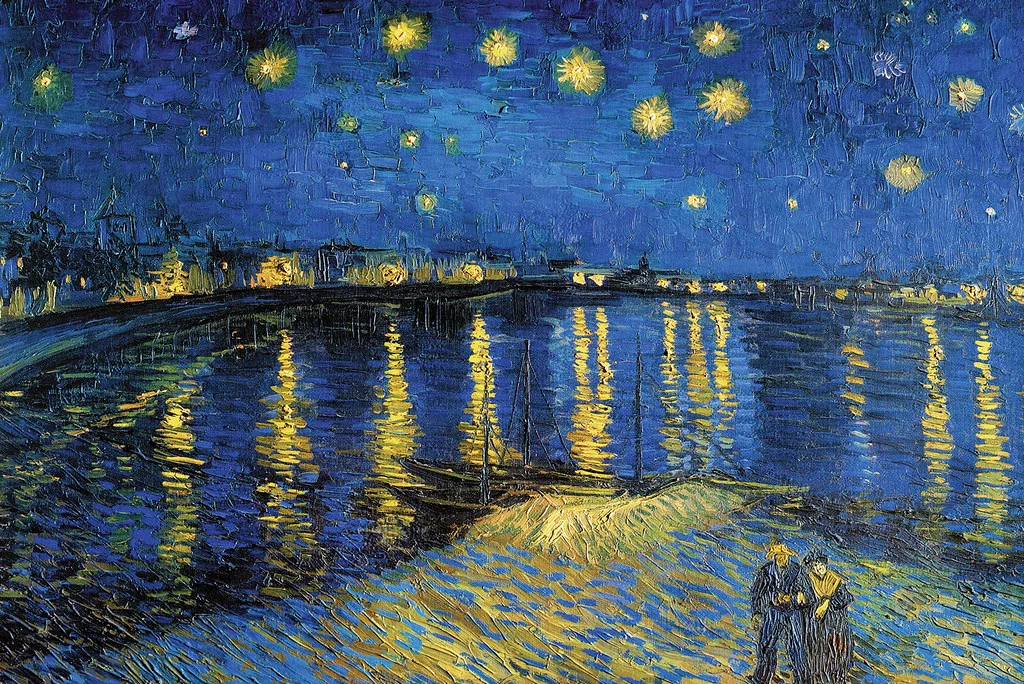
One of van Gogh’s most famous methods is impasto—applying paint in extremely thick layers. He often squeezed paint directly from the tube onto the canvas and spread it with a brush or palette knife without thinning it.
Why this matters:
- The raised paint catches real light, creating shadows and highlights within the artwork.
- It adds physical energy and urgency to the scene.
- The texture changes as the viewer moves around the painting.
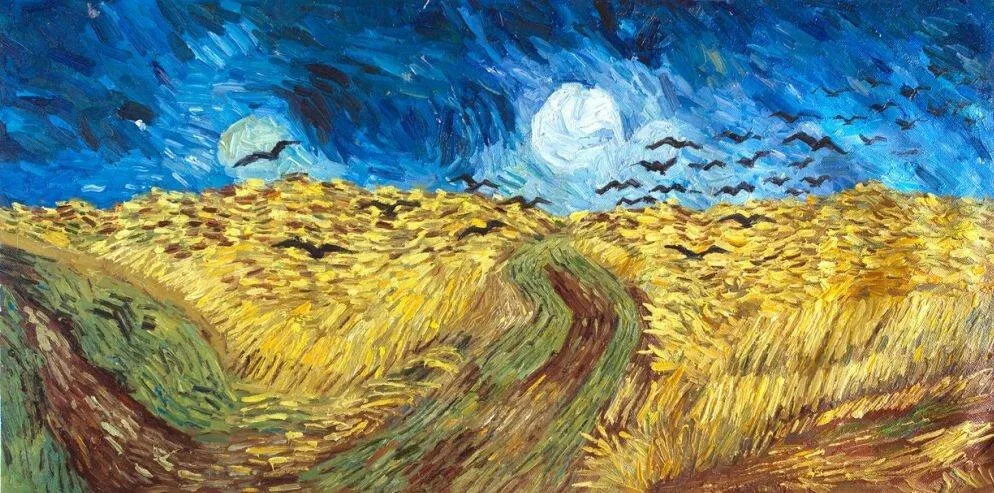
Famous examples include The Starry Night, Sunflowers, and Wheatfield with Crows.
2. Broken Color and Optical Mixing
Like the Impressionists, van Gogh avoided blending colors on a palette. Instead, he placed small strokes of two different colors side by side. This is sometimes called divisionism or pointillism, a technique he learned from Georges Seurat.
When viewed from a normal distance, the viewer’s eye naturally mixes the two colors. For instance, instead of mixing yellow and blue to get green, he painted tiny yellow dashes next to tiny blue ones. The result is a vibrant, shimmering green that no single tube of paint can replicate.
3. Directional and Rhythmic Brushstrokes
Perhaps van Gogh’s most recognizable trademark is his use of repetitive, directional strokes. Unlike traditional painters who tried to hide their brushmarks, van Gogh made them the star of the show.
He used different stroke patterns for different subjects:
- Sky: Swirling, crescent-shaped strokes (The Starry Night)
- Fields: Parallel dashes or comma-like marks (The Sower)
- Trees and flames: Upward, twisting lines that suggest movement
- Portraits: Radiating strokes flowing outward from the subject’s head
These strokes do more than describe an object. They describe energy, emotion, and rhythm. A simple chair becomes a field of vibrating blue and yellow lines.
4. Simplifying Forms for Emotional Effect
Van Gogh often reduced objects to their basic shapes. He cared less about perfect perspective and realistic detail. Instead, he focused on bold outlines and simplified forms. This distortion makes his paintings feel more intense and personal.
The Colors of Emotion: Van Gogh’s Radical Palette
Van Gogh’s use of color was not scientific or realistic. It was deeply psychological. In his many letters to his brother Theo, he explained that color should express mood, not just record reality.
Moving from Earth to Fire
Early in his career, van Gogh used only muddy, earthy tones: browns, olives, and grays. After discovering Impressionism, he threw away those dark colors. His new palette exploded with bright, modern pigments, including:
- Cadmium Yellow (his favorite)
- Ultramarine Blue
- Cobalt Violet
- Madder Red
- Emerald Green
The Power of Complementary Colors
Van Gogh studied color theory carefully. He knew that placing complementary colors (opposites on the color wheel) next to each other makes both colors appear brighter and more intense.
His most famous pairings include:
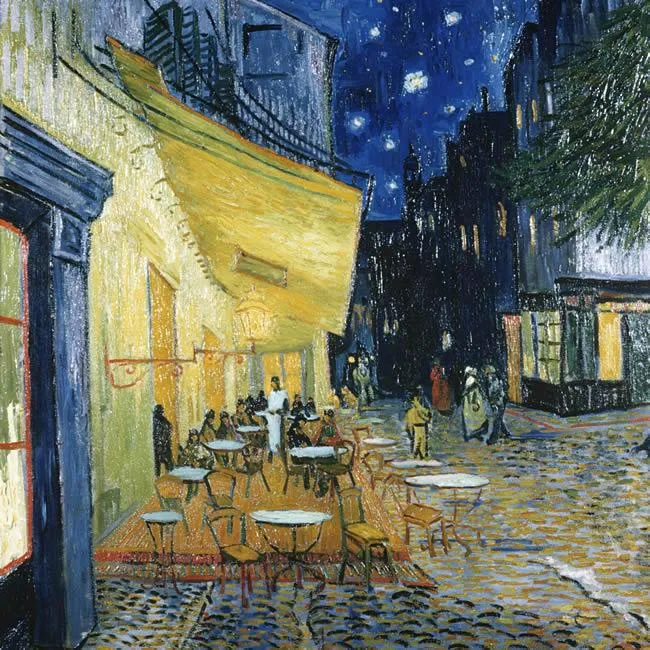
- Blue and Orange: Used in Café Terrace at Night (orange roof against a deep blue sky)
- Yellow and Purple: Used in Starry Night (yellow moon and stars against swirling purple-blue)
- Red and Green: Used in The Night Café, which he described as a place “where one can ruin oneself, go mad, or commit a crime”
The Special Meaning of Yellow
Yellow dominates van Gogh’s later work. For him, yellow represented happiness, warmth, friendship, and the bright sun of southern France. His Sunflowers series is a complete symphony of yellow tones, from pale lemon to deep ochre.
Some art historians note that his medication for mental illness (digitalis) can cause a yellow tint to vision, though this remains a theory. Regardless, yellow became his signature color.
Light and Atmosphere in Van Gogh’s Work
Van Gogh adopted the Impressionist interest in light but used it dramatically. He was not interested in realistic lighting.
Instead, he:
- Exaggerated light for emotional effect
- Made night scenes glow with unnatural brightness
- Painted shadows using colors, never black or gray
In Café Terrace at Night, the artificial light spills onto the street, creating a warm, dreamlike atmosphere. This is not how a real café looked—it is how the scene felt to van Gogh.
Subject Matter: What Did Van Gogh Paint?
Van Gogh painted a wide range of everyday subjects, including:
- Landscapes: Wheat fields, skies, olive trees, and starry nights
- Still life: Sunflowers, irises, chairs, and books
- Portraits and self-portraits: He painted over 30 self-portraits
- Rural life: Peasants, sowers, and café interiors
His painting Wheatfield with Crows is a powerful example. The vast yellow field, the dark blue sky, and the swirling black birds create a sense of loneliness and urgency.
Van Gogh vs. Traditional Impressionists
| Feature | Traditional Impressionists | Vincent van Gogh |
|---|---|---|
| Main goal | Capture realistic light and fleeting moments | Express deep emotion through art |
| Brushwork | Light, quick, often small dabs | Thick, dramatic, highly visible strokes |
| Color | Natural tones observed in nature | Intense, symbolic, sometimes unnatural |
| Mood | Calm, observational | Turbulent, personal, urgent |
| Texture | Smooth or lightly textured | Heavy impasto with visible ridges |
This comparison shows why van Gogh is considered a Post-Impressionist. He used the tools of Impressionism but changed their purpose entirely.
Analyzing a Masterpiece: The Starry Night (1889)
Let us apply everything we have learned to van Gogh’s most famous painting.
- Technique: The sky is made of hundreds of swirling, circular impasto strokes. The large cypress tree (a traditional symbol of death) rises with long, flame-like vertical strokes that contrast with the calm, horizontal village below.
- Colors: Deep Prussian blue and cobalt blue dominate the night sky. Against this, van Gogh placed brilliant cadmium yellow and white for the stars and moon. The village is painted in darker blues and purples, with small yellow windows suggesting the light of life.
- Emotion: Van Gogh painted this while staying in an asylum. The view out his window was not exactly as shown. He changed the composition to express his inner turmoil against the calm of the outside world.
How to Identify a Genuine Van Gogh
Because his style looks simple—swirls and thick paint—many fakes exist. Real van Gogh paintings share these traits:
- No tracing or copying: Each brushstroke is unique and nervous.
- Fast painting: He completed most canvases in a single sitting.
- High-quality pigments: He used pure cadmium colors, not cheap substitutes.
- Visible underdrawing: X-rays often show a sketch in pencil or blue chalk beneath the paint.
Van Gogh’s Lasting Impact on Art
Although van Gogh sold only one painting during his lifetime, his influence grew enormously after his death. His innovative techniques inspired several major art movements, including:
- Expressionism: Artists like Edvard Munch and Egon Schiele adopted his emotional use of color and distortion.
- Fauvism: Henri Matisse and André Derain admired his bold, unnatural colors.
- Abstract Expressionism: Mid-20th century painters valued his focus on gesture and texture.
Today, van Gogh’s works are among the most famous and valuable in the world. Museums like the Van Gogh Museum in Amsterdam and the Musée d’Orsay in Paris draw millions of visitors who come to see his thick paint, swirling skies, and explosive colors.
Conclusion: The Legacy of a Unique Vision
Vincent van Gogh took the bright, light-filled ideas of Impressionism and transformed them into a deeply emotional visual language. His impasto technique gave his paintings physical texture. His broken color created vibrant, shimmering light. And his complementary color pairings gave his work psychological power.
He was not a pure Impressionist. He was something more: an artist who used Impressionist tools to express his inner world. Today, his swirling skies, thick paint blobs, and impossible colors are no longer seen as mistakes. They are celebrated as the work of a man who saw and felt the world differently from anyone else.
When you stand before The Starry Night or the Sunflowers, remember: you are not just looking at a landscape or a vase of flowers. You are seeing the rhythm of van Gogh’s heartbeat, painted in cadmium yellow and ultramarine blue.