What Is the Museum of Modern Art (MoMA)?
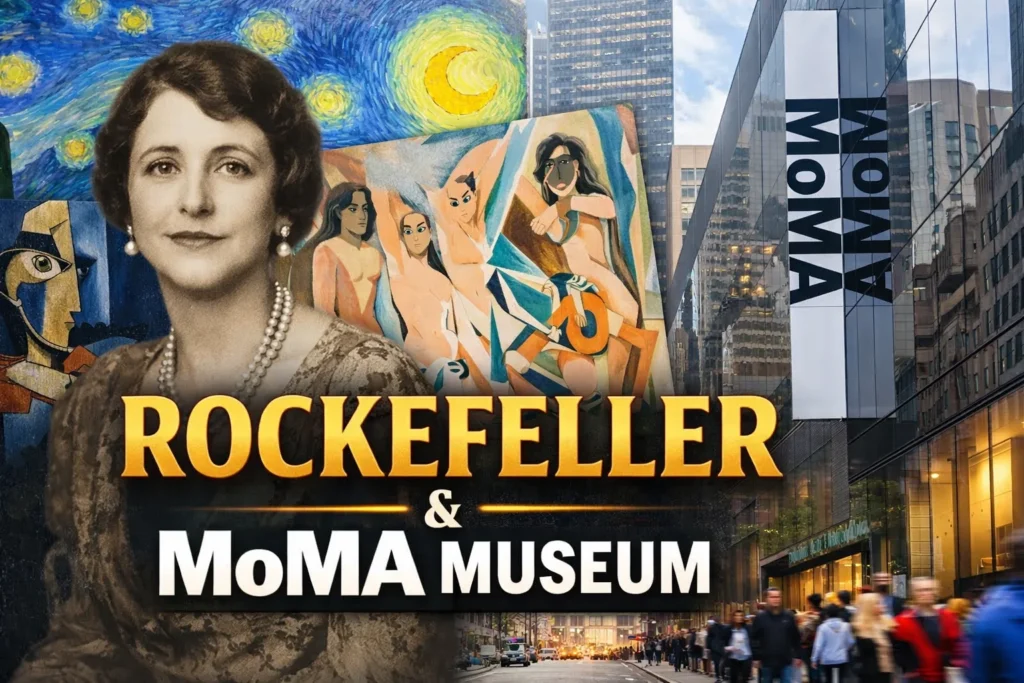
The Museum of Modern Art (MoMA), founded in 1929 in New York City, stands as one of the most influential institutions for modern and contemporary art in the world. Its mission is to collect, preserve, exhibit, and interpret modern artistic expressions — from painting and sculpture to design, film, architecture, photography, new media, and performance. Over more than 90 years, MoMA has shaped public understanding of the visual culture of the 20th and 21st centuries.
From its earliest exhibitions to the thousands presented to date, the museum has both reflected and driven change in global art practice. It now holds nearly 200,000 works spanning roughly 150 years of art and design history.
MoMA’s Most Famous Collection Highlights
MoMA is celebrated not only for its blockbuster exhibitions but also for its permanent collection masterpieces — works whose influence on art history is profound.
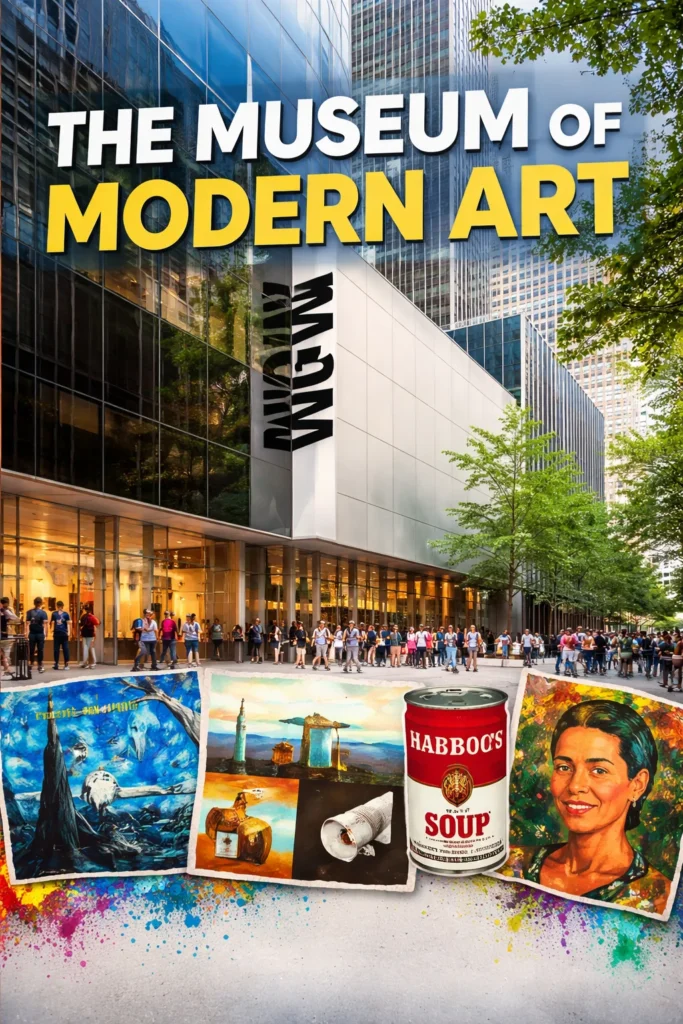
1. Vincent van Gogh — The Starry Night
Arguably the most iconic painting in MoMA’s collection, The Starry Night draws millions of visitors yearly. Painted in 1889 while Van Gogh was in an asylum in France, the swirling night sky over Saint-Rémy captures emotion and color in a way that redefined expressionism.
2. Salvador Dalí — The Persistence of Memory
This surrealist masterpiece with melting clocks is one of the most recognizable works of 20th-century art. It challenges perceptions of time and reality, and has been part of MoMA since the 1930s.
3. Pablo Picasso — Les Demoiselles d’Avignon
A revolutionary work from 1907, Picasso’s Les Demoiselles d’Avignon disrupted academic painting and signaled the birth of Cubism. Its fragmented figures changed the direction of modern art.
4. Andy Warhol — Campbell’s Soup Cans and Gold Marilyn Monroe
Warhol’s pop art icons — everyday consumer goods and celebrity imagery — reflect mass culture and have profoundly influenced how art dialogues with consumer society.
5. Frida Kahlo — Self-Portrait with Cropped Hair
This powerful self-portrait explores identity, autonomy, and personal transformation, embodying Kahlo’s unique artistic voice and resilience.
6. Henri Matisse — The Red Studio
A major highlight in the MoMA collection, this painting is celebrated as one of modern art’s most influential interiors, illustrating Matisse’s vibrant color and compositional innovation.
These works represent just a fraction of MoMA’s rich holdings, which also span photography, film, architecture, design, and media art — showcasing modernism’s evolution and global impact.
Major Exhibitions in MoMA’s History
MoMA’s exhibition history mirrors key moments in art history and cultural change. From early modernist showcases to ambitious retrospectives and thematic design surveys, the museum’s exhibitions have been groundbreaking.
Early Landmark Exhibitions
- Cézanne, Gauguin, Seurat, Van Gogh (1929)
MoMA’s first exhibition set the tone for its modernist mission, introducing American audiences to major European avant-garde art. - Henri Matisse Solo Show (1931)
The first major MoMA exhibition devoted to a single artist. - Pablo Picasso Retrospective (1939)
One of the most influential exhibitions of the 20th century, presenting Guernica and an expansive view of Picasso’s art. - The Family of Man (1955)
Curated by Edward Steichen, this global photography exhibition brought together 503 photographs from 68 countries, emphasizing human commonality and experience; it toured worldwide to record audiences.
Noteworthy 20th-Century and Modern Exhibitions
- Indian Art of the United States (1941)
A groundbreaking full-scale presentation of Native American art in a major U.S. museum, changing perceptions of Indigenous culture. - Pirouette: Turning Points in Design (2025)
A major design survey examining objects from Bic pens to original Apple Mac OS icons, showing how everyday design shapes life and culture.
Contemporary and Recent Exhibitions
MoMA continues to explore cutting-edge art practice and reconsider how we understand culture and society.
- Face Value: Celebrity Press Photography (2026)
Curated by Ron Magliozzi, this show reveals how Hollywood images were constructed, featuring annotated Hollywood stills that challenge notions of authenticity in celebrity imagery. - Wifredo Lam: When I Don’t Sleep, I Dream (2025–2026)
Hosting the first major U.S. retrospective of Cuban modernist Wifredo Lam, this exhibit highlighted the artist’s cross-cultural influence and diverse stylistic range. - Ruth Asawa Retrospective (2025)
A comprehensive survey celebrating the Japanese American sculptor’s legacy in modern sculpture and art education. - Ongoing and Rotating Presentations
MoMA regularly presents ongoing installations, retrospectives, and thematic exhibitions across painting, photography, film, media, and design, such as the ongoing Collection Highlights display.
MoMA’s Broader Cultural Impact
Beyond exhibitions, MoMA has played a role in debates about art and representation: for example, the Women Artists Visibility Event (W.A.V.E.) in 1984, a protest calling for greater inclusion of women artists in MoMA’s exhibitions — reflecting wider conversations about equity in art institutions.
MoMA also collaborates with MoMA PS1, expanding its reach into experimental and contemporary art scenes, and maintains an extensive library and archives serving students, scholars, and researchers worldwide.
Conclusion
The Museum of Modern Art in New York is more than a museum — it is a cultural force that has defined and redefined how the world understands modern and contemporary art. From masterpieces in its permanent collection to groundbreaking exhibitions that reshape artistic discourse, MoMA remains a central and dynamic institution in global cultural life.
🕰 1920s–1930s: The Foundation of Modernism
1929
- Cézanne, Gauguin, Seurat, Van Gogh
MoMA’s very first exhibition, establishing its commitment to European modernism.
1930
- Painting in Paris
- American Painting and Sculpture
1931
- Henri Matisse (Retrospective)
MoMA’s first major solo exhibition dedicated to a single artist.
1936
- Cubism and Abstract Art
Curated by Alfred H. Barr Jr., this exhibition defined modern art movements for generations. - Fantastic Art, Dada, Surrealism
Introduced American audiences to avant-garde European surrealism.
1939–1940
- Picasso: Forty Years of His Art
A groundbreaking retrospective that cemented Picasso’s global importance.
🕰 1940s: Expanding Global Perspectives
1941
- Indian Art of the United States
One of the first major museum exhibitions to present Native American art seriously.
1946
- Fourteen Americans
Spotlighted emerging contemporary American artists.
🕰 1950s: Photography & Post-War Influence
1955
- The Family of Man (Curated by Edward Steichen)
A historic photography exhibition featuring 503 photographs from 68 countries. It toured globally and became one of the most visited exhibitions ever.
1958
- Jackson Pollock (Retrospective)
Established Abstract Expressionism’s dominance in post-war art.
🕰 1960s: Pop Art & New Movements
1962
- The Art of Assemblage
1965
- Responsive Eye
Major exhibition of Op Art.
1967
- Picasso Sculpture
🕰 1970s: Architecture & Conceptual Art
1970
- Information
A landmark conceptual art exhibition.
1975
- Projects Series Begins
MoMA’s experimental exhibition platform for emerging artists.
🕰 1980s: Identity & Expanding Narratives
1984
- “Primitivism” in 20th Century Art
Explored influence of tribal art on modern artists (later debated critically).
1988
- Deconstructivist Architecture
Influential architecture exhibition shaping global design discourse.
🕰 1990s: Global Contemporary Art
1992
- Henri Matisse Retrospective
1998
- Jackson Pollock Retrospective
🕰 2000s: Blockbusters & Reinstallations
2004
- Reinstallation of Permanent Collection
Organized thematically rather than chronologically.
2006
- Edvard Munch: The Modern Eye
2008
- Van Gogh and the Colors of the Night
🕰 2010s: Contemporary Expansion
2010
- Marina Abramović: The Artist Is Present
A record-breaking performance art exhibition.
2012
- Cindy Sherman Retrospective
2015
- Yoko Ono: One Woman Show, 1960–1971
2017
- Items: Is Fashion Modern?
2019
- MoMA Expansion Reopening Exhibitions
Complete reinstallation after major architectural renovation.
🕰 2020s: Reframing Modernism
2020
- Judd
- Donald Judd Retrospective
2021
- Automania
- Sophie Taeuber-Arp: Living Abstraction
2022
- Henri Matisse: The Red Studio
2023
- Signals: How Video Transformed the World
2024–2025
- Major retrospectives of global modernists and women artists
- Ongoing contemporary art commissions
- Rotating thematic collection installations
📊 Exhibition Impact Summary
Over its history, MoMA has organized:
- 3,500+ exhibitions
- Defined movements like Cubism, Surrealism, Abstract Expressionism, Pop Art
- Elevated photography, film, architecture, and design to museum status
- Expanded to include performance art, media art, and global contemporary voices