Introduction
Prada is one of the most influential luxury fashion houses in the world. Known for its minimalist elegance, innovative designs, and exceptional craftsmanship, the Italian brand has become a symbol of sophistication and modern luxury. From a small leather goods shop in Milan in 1913, Prada has evolved into a global fashion empire selling luxury clothing, handbags, footwear, and accessories across more than 70 countries.
Today, Prada is not only a fashion label but also a major luxury group that includes brands such as Miu Miu, Church’s, and Car Shoe.
Table of Contents
1. Founding and Early History
Prada was founded in 1913 in Milan, Italy by Mario Prada and his brother Martino Prada. The company originally operated under the name Fratelli Prada (Prada Brothers).
The store specialized in luxury leather handbags, travel trunks, and accessories imported from England. The products quickly became popular among wealthy customers and European aristocrats due to their quality craftsmanship and elegant design.
In 1919, Prada gained significant recognition when it became an official supplier to the Italian Royal Household, which allowed the company to use the royal coat of arms in its logo.
Despite its early success, the brand remained a relatively small family business for decades.
2. Transformation Under Miuccia Prada
The real transformation of Prada began in the late 1970s when Miuccia Prada, Mario Prada’s granddaughter, took over the company together with entrepreneur Patrizio Bertelli.
Miuccia Prada revolutionized the brand by introducing new designs and materials. One of the most important innovations came in 1984 when Prada launched a handbag made from industrial nylon fabric. This product became an unexpected success and changed the perception of luxury fashion.
Key Innovations by Miuccia Prada
- Introduction of minimalist luxury design
- Use of industrial materials like nylon
- Creation of modern luxury fashion aesthetics
- Expansion into ready-to-wear clothing
In 1988, Prada launched its first women’s ready-to-wear fashion collection, which quickly gained international attention.
3. Expansion Into a Global Luxury Group
During the 1990s and 2000s, Prada expanded rapidly into international markets and diversified its product portfolio.
Major strategic developments included:
- Launch of Miu Miu brand in 1993
- Acquisition of luxury brands such as Church’s and Car Shoe
- Expansion into fragrances, eyewear, and cosmetics
- Opening hundreds of retail stores worldwide
Today the Prada Group operates over 600 retail stores globally and distributes products through flagship boutiques, department stores, and online platforms.
4. Prada Product Categories
Prada offers a wide range of luxury fashion products. Its products combine Italian craftsmanship with modern design innovation.
1. Handbags and Leather Goods
Leather goods are Prada’s most profitable category and the core of the brand’s identity.
Popular handbag collections include:
- Prada Galleria
- Prada Re-Edition
- Prada Cleo
- Prada Nylon bags
These products are famous for their durability, premium leather, and minimalist design.
2. Ready-to-Wear Clothing
Prada produces high-fashion clothing for both men and women.
Key categories include:
- Dresses
- Jackets and coats
- Shirts and trousers
- Knitwear
- Luxury casual wear
The brand’s runway collections often influence global fashion trends.
3. Footwear
Prada footwear combines elegance with comfort.
Popular types include:
- Luxury sneakers
- Leather boots
- Loafers
- High heels
- Sandals
The company also owns Church’s, a famous British luxury shoe brand.
4. Accessories
Accessories represent another important part of Prada’s revenue.
Products include:
- Sunglasses
- Belts
- Jewelry
- Scarves
- Wallets
Prada eyewear is produced through licensing agreements with specialized manufacturers.
5. Fragrances and Beauty
Prada fragrances are globally popular and often produced through partnerships with cosmetics companies.
Well-known fragrances include:
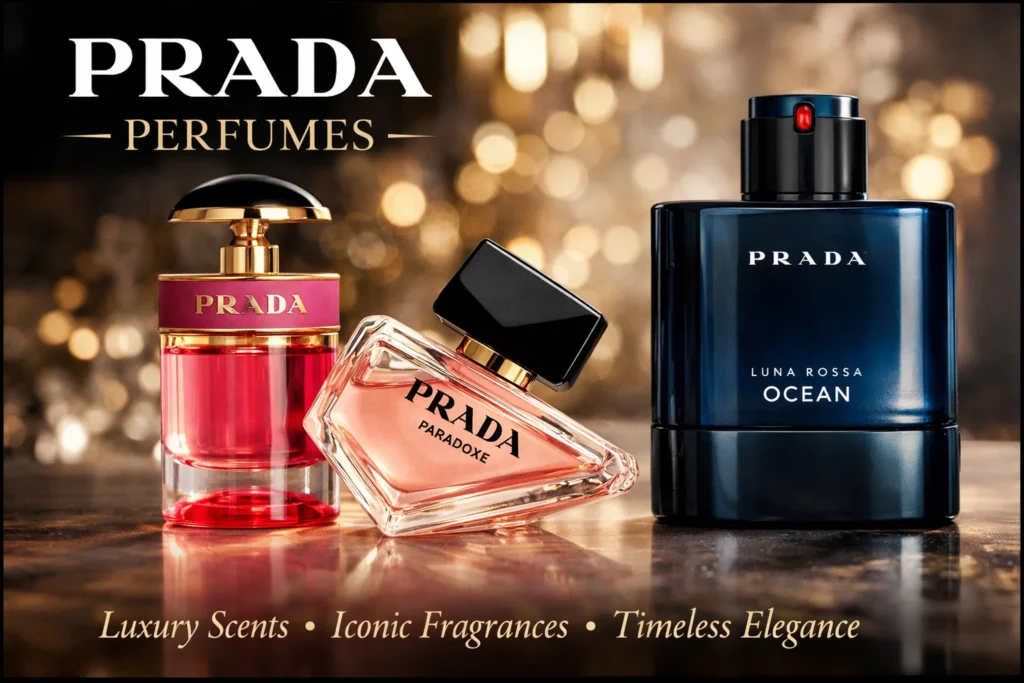
- Prada Paradoxe
- Prada Luna Rossa
- Prada Candy
Prada Perfume Products
Luxury fashion house Prada is also widely known for its premium fragrances. Prada entered the perfume industry in 2004, when it released its first major fragrance and partnered with fragrance companies to produce and distribute its perfumes globally.
Prada perfumes are famous for their elegant compositions, long-lasting scent profiles, and minimalist bottle design. The brand creates fragrances for both men and women, blending floral, woody, citrus, amber, and musky notes to reflect modern luxury.
Below are the major Prada perfume collections and products.
1. Prada Paradoxe Collection
One of Prada’s most popular modern fragrance lines is Prada Paradoxe, launched in 2022.
Key Characteristics
- Floral and amber scent
- Fresh citrus opening
- Warm vanilla and musk base
- Elegant triangular bottle design
Main Notes
- Top: pear, bergamot, tangerine
- Middle: orange blossom, neroli, jasmine
- Base: vanilla, amber, white musk
This fragrance represents the modern Prada woman—strong, elegant, and complex.
2. Prada Candy Collection
Another iconic fragrance is Prada Candy, introduced in 2011.
Features
- Sweet and playful scent
- Warm caramel and vanilla notes
- Long-lasting fragrance suitable for evening wear
Main Ingredients
- Musk
- Benzoin resin
- Caramel accords
The Candy line later expanded with variations such as:
- Candy Florale
- Candy Kiss
- Candy Sugar Pop
- Candy Night
3. Prada Luna Rossa Collection (Men)
The Prada Luna Rossa is Prada’s famous men’s fragrance inspired by sailing and sports.
Popular Versions
- Luna Rossa
- Luna Rossa Carbon
- Luna Rossa Sport
- Luna Rossa Ocean
Scent Profile
- Fresh aromatic notes
- Lavender and citrus
- Woody and mineral base
For example, Luna Rossa Carbon combines bergamot, pepper, lavender, and ambroxan to create a fresh but powerful masculine scent.
4. Prada Infusion Collection
The Les Infusions de Prada series focuses on elegant, light fragrances built around a single ingredient.
Famous Infusion Perfumes
- Infusion d’Iris
- Infusion de Rose
- Infusion de Vanille
- Infusion de Gingembre
- Infusion de Figue
These perfumes are known for soft, skin-like scents that feel natural and sophisticated rather than overpowering.
5. Prada Amber Collection
One of Prada’s earliest fragrance lines includes Prada Amber.
Variants
- Amber Pour Homme
- Amber Pour Homme Intense
Fragrance Notes
- Citrus top notes
- Floral heart notes
- Warm amber and sandalwood base
These fragrances are classic Prada scents known for their elegance and sophistication.
6. L’Homme Prada & La Femme Prada
Prada also launched a fragrance pair designed for modern men and women.
L’Homme Prada
- Iris and amber notes
- Elegant and clean scent
- Suitable for office and daily wear
La Femme Prada
- Frangipani flower
- Ylang-ylang
- Vanilla and beeswax base
These perfumes represent a refined and contemporary interpretation of masculinity and femininity.
7. New Prada Perfumes
Prada continues launching new fragrances to stay competitive in the luxury perfume market.
Recent releases include:
- Paradoxe Intense
- Luna Rossa Ocean
- Infusion de Vanille
- Infusion d’Ylang
These perfumes combine modern chemistry, sustainable ingredients, and refillable bottles to match the brand’s sustainability goals.
5. Prada Brands Portfolio
Prada Group operates several luxury brands.
Main Brands
| Brand | Description |
|---|---|
| Prada | Core luxury fashion brand |
| Miu Miu | Youth-focused fashion label |
| Church’s | British luxury footwear |
| Car Shoe | Luxury driving shoes |
In 2025, Prada also acquired Versace for around $1.3–1.4 billion, strengthening its position in the global luxury market.
6. Revenue and Financial Performance
Prada has experienced strong growth in recent years as demand for luxury goods increased worldwide.
Recent Revenue
- 2024 revenue: about €5.4 billion
- 2025 revenue: around €5.7 billion
- Net profit: about €852 million in 2025
The brand Prada itself contributes over 70% of the group’s revenue, making it the most important division.
Geographic Markets
Prada earns most of its revenue from:
- Asia-Pacific (largest market)
- Europe
- Americas
- Japan and Middle East
Asia has become particularly important due to strong luxury demand in China and other Asian markets.
7. Growth Strategy
Prada continues to expand through several strategic initiatives.
1. Digital Expansion
The company has invested heavily in e-commerce, digital marketing, and online luxury retail.
2. Product Innovation
Prada frequently releases new designs while maintaining iconic products like nylon bags.
3. Brand Expansion
The acquisition of Versace aims to strengthen Prada’s position against luxury conglomerates such as LVMH and Kering.
4. Sustainability
Prada has introduced sustainability initiatives such as Re-Nylon, a recycled material used in bags and clothing.
8. Prada’s Influence on Global Fashion
Prada has significantly influenced modern fashion design.
The brand is known for:
- Intellectual fashion concepts
- Minimalist aesthetics
- Innovative materials
- Cultural collaborations
Its runway shows are considered among the most influential in the fashion industry.
9. Future Outlook
Prada’s future growth will likely come from:
- Expanding digital luxury shopping
- Growth in Asian luxury markets
- Development of sustainable fashion
- Integration of newly acquired brands such as Versace
Despite competition from major luxury groups, Prada remains one of the most respected names in high fashion.
Conclusion
From a small leather goods store in Milan to a multi-billion-euro global fashion group, Prada’s journey represents one of the most remarkable success stories in the luxury industry. With iconic products, strong brand identity, and continued innovation, Prada continues to shape the future of luxury fashion.
Its commitment to craftsmanship, design excellence, and strategic expansion ensures that Prada will remain a dominant force in the global fashion market for decades to come.