
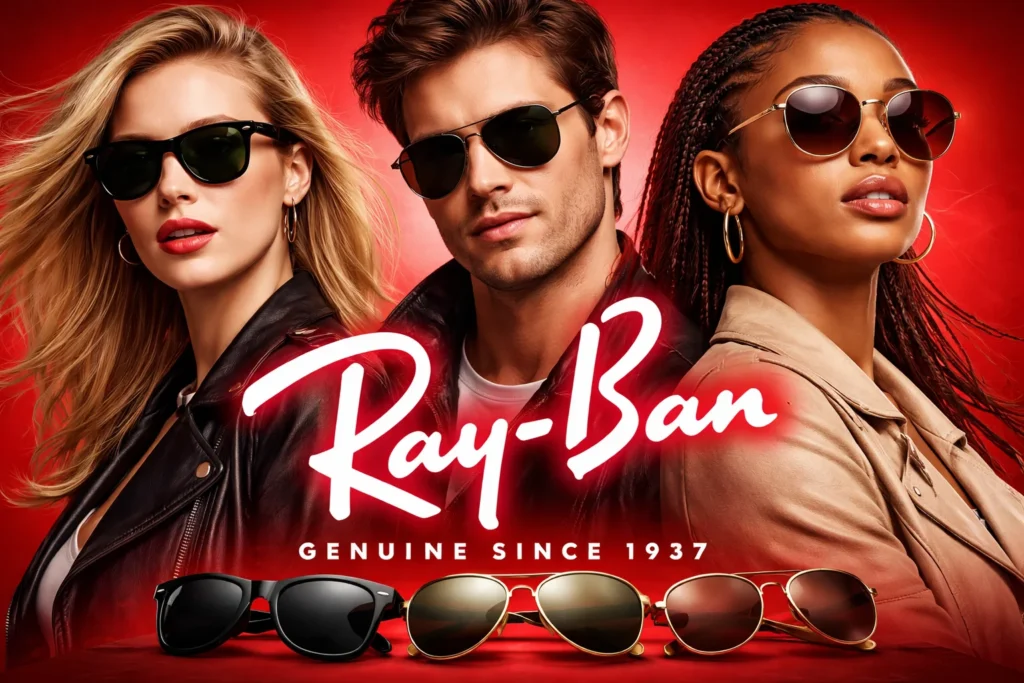
Ray-Ban: The Iconic Eyewear Brand That Redefined Style and Vision
Introduction
Ray-Ban is one of the most recognizable eyewear brands in the world, synonymous with timeless style, innovation, and cultural influence. From aviators worn by military pilots to sunglasses embraced by Hollywood icons, Ray-Ban has shaped the way the world sees eyewear—not just as a necessity, but as a fashion statement. With nearly a century of history, Ray-Ban continues to dominate the global eyewear industry through its commitment to quality, design, and authenticity.
Origins and History of Ray-Ban
Ray-Ban was founded in 1937 by Bausch & Lomb, an American company specializing in optical products. The brand was created to meet a specific need: U.S. Army Air Corps pilots required eyewear that could reduce glare while flying at high altitudes.
Birth of the Aviator
In response, Ray-Ban introduced the Aviator sunglasses, featuring:
Green anti-glare lenses
Thin metal frames
A teardrop shape to protect the eyes from sunlight at all angles
Originally known as Anti-Glare, the sunglasses were later branded as Ray-Ban, meaning “banning the rays” of the sun.
Origins of Aviator Sunglasses
Military Beginnings
Aviator sunglasses were originally developed in the 1930s for military pilots. As aviation technology advanced, pilots began flying at higher altitudes, where intense sunlight and glare posed serious challenges to vision and safety.
To solve this problem, optical specialists designed a new type of eyewear that could:
Reduce glare
Protect the eyes from strong sunlight
Provide clear vision in extreme conditions
In 1937, the first aviator sunglasses were introduced to the public, marking the beginning of a design that would change eyewear forever.
Design Characteristics of Aviator Sunglasses
Aviator sunglasses are defined by several distinctive design elements that remain largely unchanged today.
1. Teardrop-Shaped Lenses
Designed to fully cover the eye socket
Protect the eyes from sunlight coming from all angles
Especially effective for pilots facing overhead glare
2. Thin Metal Frame
Lightweight and durable
Originally made from metal alloys for strength
Offers comfort during extended wear
3. Double or Triple Bridge
Provides structural support
Enhances balance on the face
Adds to the classic aviator aesthetic
4. Adjustable Nose Pads
Ensures a secure, custom fit
Increases comfort for long-term use
Functional Advantages
Aviator sunglasses were created for performance, and their design still offers practical benefits today.
Excellent sun coverage due to large lenses
Reduced glare, especially with polarized lenses
Clear vision with high-quality glass or crystal lenses
UV protection against harmful UVA and UVB rays
These features make aviators ideal for driving, flying, outdoor sports, and everyday wear.
Aviator Sunglasses in Popular Culture
Aviator sunglasses gained massive popularity after World War II, when returning pilots continued wearing them in civilian life. Hollywood soon embraced the style.
Iconic Appearances
General Douglas MacArthur during World War II
Paul Newman and Marlon Brando in classic films
Tom Cruise in Top Gun, which sparked a global aviator trend
Robert De Niro and Brad Pitt in modern cinema
Aviators became symbols of masculinity, rebellion, authority, and charisma—qualities that continue to define the style today.
Evolution of Aviator Sunglasses
While the original design remains intact, aviator sunglasses have evolved to meet modern tastes and technologies.
Lens Variations
Classic green and brown lenses
Mirrored lenses for a bold look
Gradient lenses for fashion appeal
Polarized lenses for enhanced clarity
Frame Materials
Traditional metal frames
Titanium for ultra-lightweight comfort
Acetate and mixed-material designs
Modern Adaptations
Prescription aviator sunglasses
Oversized and slim variations
Colorful frames and lenses for contemporary fashion
Who Can Wear Aviator Sunglasses?
One of the reasons aviator sunglasses remain popular is their versatility.
Suitable for men and women
Flattering on most face shapes, especially oval, square, and heart-shaped faces
Works well with casual, formal, and sporty outfits
Their timeless design makes them a reliable choice for all age groups.
Aviator Sunglasses in Fashion
Aviators have successfully bridged the gap between function and fashion. They are regularly featured in:
High-end fashion shows
Celebrity street style
Military-inspired fashion trends
Whether paired with a leather jacket, a business suit, or casual summer wear, aviator sunglasses add instant sophistication and edge.
Why Aviator Sunglasses Remain Timeless
The enduring popularity of aviator sunglasses can be attributed to:
A perfect balance of form and function
Strong historical and cultural roots
Continuous reinvention without losing identity
Universal appeal across generations
Few fashion accessories can claim such longevity and global recognition.
Conclusion
Aviator sunglasses are more than just eyewear—they are a legacy. Born out of necessity, refined through innovation, and immortalized by culture, aviators represent strength, freedom, and timeless style. Decades after their creation, they continue to be a staple in the world of fashion and functionality, proving that great design never goes out of style.
Rise to Popularity
Ray-Ban’s popularity soared beyond the military in the 1940s and 1950s. Hollywood played a major role in turning Ray-Ban into a cultural icon.
1952: Introduction of the Wayfarer, a bold plastic frame that broke away from traditional metal designs.
Celebrities like James Dean, Marilyn Monroe, Audrey Hepburn, and later Tom Cruise helped cement Ray-Ban’s image as a symbol of rebellion, confidence, and cool.
Movies such as Breakfast at Tiffany’s, Top Gun, The Blues Brothers, and Men in Black significantly boosted Ray-Ban’s global appeal.
Acquisition by Luxottica
In 1999, Bausch & Lomb sold Ray-Ban to Luxottica Group, the world’s largest eyewear company, based in Italy. This acquisition marked a turning point:
Manufacturing moved largely to Italy
Design innovation accelerated
Global retail expansion increased
Under Luxottica, Ray-Ban strengthened its position as a premium eyewear brand while maintaining its classic identity.
Iconic Ray-Ban Products
1. Ray-Ban Aviator
Original pilot sunglasses
Metal frame with crystal lenses
Available in classic green, brown, mirrored, and polarized lenses
2. Ray-Ban Wayfarer
One of the best-selling sunglasses of all time
Thick acetate frames
A symbol of rock-and-roll and pop culture
3. Ray-Ban Clubmaster
Inspired by 1950s intellectual style
Semi-rimless design
Popular among professionals and creatives
4. Ray-Ban Round
Retro design inspired by John Lennon
Circular lenses
Lightweight metal frames
5. Ray-Ban Prescription Eyewear
Optical frames with prescription lenses
Combines fashion with everyday vision correction
Innovation and Technology
Ray-Ban is known not only for style but also for optical innovation:
Polarized lenses to reduce glare
UV400 protection to block harmful UV rays
Crystal and high-quality glass lenses for superior clarity
Lightweight acetate and metal frames for comfort and durability
In recent years, Ray-Ban has also entered the tech space with Ray-Ban Smart Glasses, combining eyewear with audio and digital features.
Ray-Ban and Fashion Influence
Ray-Ban has successfully balanced trend and tradition. While staying true to its classic designs, the brand regularly collaborates with artists, designers, and influencers. Ray-Ban eyewear is worn by people across generations, cultures, and professions—making it one of the most democratic luxury brands in the world.
The brand’s slogan, “Never Hide”, reflects its philosophy of self-expression and individuality.
Global Presence and Brand Value
Today, Ray-Ban is sold in over 100 countries through:
Brand stores
Optical retailers
Online platforms
It consistently ranks among the top eyewear brands worldwide, known for trust, authenticity, and premium craftsmanship.
Conclusion
Ray-Ban is more than just an eyewear brand—it is a cultural phenomenon. From protecting pilots’ eyes in the sky to becoming a symbol of confidence on the streets, Ray-Ban has evolved while staying true to its roots. With its iconic designs, technological innovation, and lasting influence on fashion and pop culture, Ray-Ban remains a timeless brand that continues to shape how the world sees style and vision.