Duracell: The Story of a Battery Giant and Its Journey to Global Success
Duracell is one of the world’s most recognizable and trusted battery brands, famous for its long-lasting power and iconic copper-top design. From humble scientific beginnings to becoming a global leader in consumer batteries, Duracell’s story is one of innovation, strategic branding, and relentless focus on performance.
Early Origins: Science Meets Opportunity (1920s–1940s)
The origins of Duracell trace back to the early 1920s, when Samuel Ruben, a brilliant inventor and scientist, partnered with Philip Rogers Mallory, the founder of the P. R. Mallory Company. Ruben specialized in electrochemistry, while Mallory was an experienced industrialist. Together, they focused on improving battery technology at a time when portable electrical power was still unreliable and limited.
The P. R. Mallory Company initially produced batteries for military equipment, medical devices, and industrial applications. During World War II, Mallory’s batteries became crucial for wartime communication devices, radios, and other portable equipment. This period played a major role in shaping the company’s technical expertise and reputation for reliability.
The Birth of the Duracell Brand (1950s–1960s)
The name “Duracell” was officially introduced in 1964. The brand name combined two powerful ideas:
“Dura” meaning durable
“Cell” referring to a battery cell
This branding emphasized what the company wanted to stand for: long-lasting, dependable energy.
Duracell was among the pioneers of alkaline battery technology, which was a major improvement over traditional zinc-carbon batteries. Alkaline batteries lasted significantly longer and performed better in high-drain devices. This innovation gave Duracell a competitive advantage at a time when consumer electronics such as radios, toys, and flashlights were becoming common in households.
Entry into the Consumer Market and Rapid Growth (1970s)
In the 1970s, Duracell shifted its focus more aggressively toward the consumer battery market. The company launched batteries specifically designed for everyday household devices, positioning itself as a premium brand rather than a low-cost alternative.
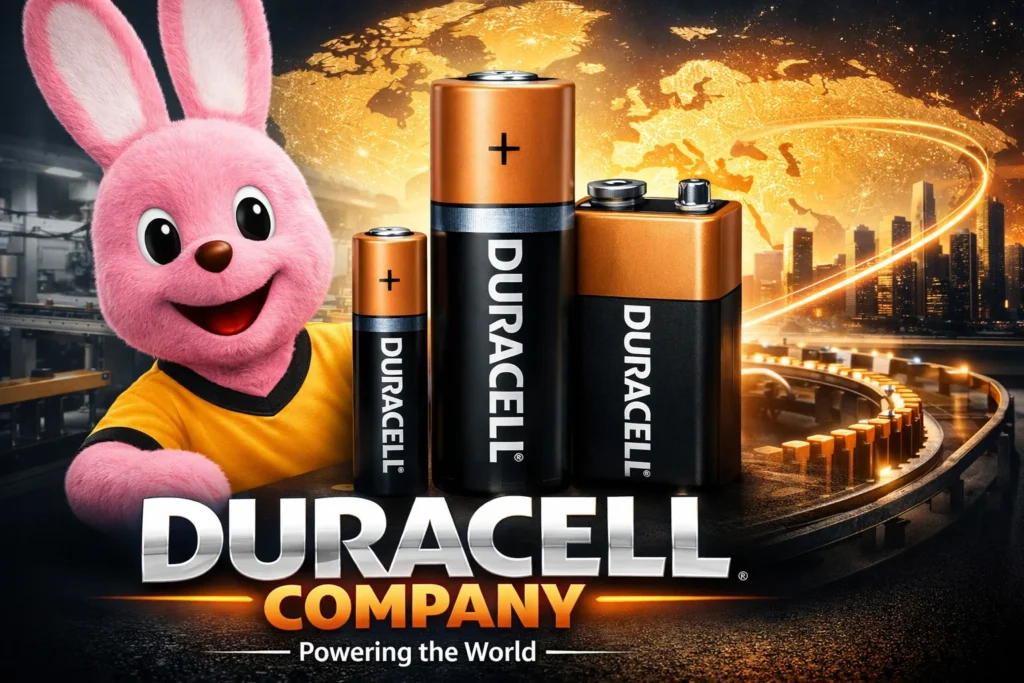
One of the most important milestones during this period was the introduction of the copper-top design in 1973. The black body with a copper-colored top became a powerful visual symbol of quality and endurance. This distinctive look made Duracell instantly recognizable on store shelves and helped differentiate it from competitors.
The Duracell Bunny and Marketing Brilliance (1970s–1990s)
Duracell’s success was not driven by technology alone—it was also fueled by brilliant marketing. In 1973, the company introduced the now-legendary Duracell Bunny in television advertisements.
The ads typically showed multiple toy animals powered by different batteries stopping one by one, while the Duracell-powered bunny kept going. This simple yet effective message—“Duracell lasts longer”—resonated strongly with consumers and reinforced the brand’s core promise.
Over the decades, the Duracell Bunny became one of the most enduring advertising mascots in history, helping the brand maintain strong emotional and psychological connections with consumers worldwide.
Global Expansion and Corporate Ownership (1990s–2000s)
In 1986, the P. R. Mallory Company was acquired by The Gillette Company, which later became part of Procter & Gamble (P&G) in 2005. Under P&G’s ownership, Duracell benefited from:
Global distribution networks
Advanced marketing expertise
Strong retail partnerships
This period marked significant international expansion, with Duracell entering markets across Europe, Asia, the Middle East, and Latin America. The brand established itself as a global standard for high-performance batteries.
In 2016, Duracell became a standalone company after being acquired by Berkshire Hathaway, the investment firm led by Warren Buffett. This move allowed Duracell to operate with greater focus and independence while benefiting from Berkshire Hathaway’s long-term business philosophy.
Innovation and Product Development
Duracell has consistently invested in research and development to stay ahead in a competitive market. Key innovations include:
Advanced alkaline batteries designed for high-drain devices such as digital cameras and gaming controllers
Lithium coin and button cells for medical devices, watches, and key fobs
Rechargeable batteries and charging systems
Child-safety technology, including bitter-coated lithium coin batteries to prevent accidental ingestion
Duracell’s commitment to quality control and performance testing has helped maintain consumer trust across generations.
Sustainability and Environmental Responsibility
In recent years, Duracell has taken significant steps toward sustainability and environmental responsibility. The company has focused on:
Reducing packaging waste
Increasing the use of recycled materials
Improving energy efficiency in manufacturing
Encouraging responsible battery disposal and recycling
These efforts reflect Duracell’s recognition of its environmental impact and its responsibility as a global manufacturer.
How Duracell Reached Global Success
Duracell’s rise to success can be attributed to several key factors:
Scientific innovation – Early investment in alkaline battery technology
Strong branding – Memorable visuals and consistent messaging
Trust and reliability – Performance proven over decades
Strategic ownership – Support from major corporations and investors
Global reach – Effective expansion into international markets
Continuous improvement – Adapting to new technologies and consumer needs
Duracell and Warren Buffett: A Partnership Built on Long-Term Value
Duracell is one of the world’s most trusted battery brands, known for reliability, durability, and innovation. Its association with Warren Buffett, one of the most successful investors in history, further strengthened its reputation as a stable and valuable company. The acquisition of Duracell by Buffett’s company, Berkshire Hathaway, is a classic example of value investing and long-term business thinking.
Background of Duracell
Duracell originated from the P. R. Mallory Company in the 1920s and became famous for pioneering alkaline battery technology. Over decades, it built a strong global presence through innovation, premium branding, and effective marketing—especially the iconic Duracell Bunny, which symbolized long-lasting power. By the early 21st century, Duracell had become a household name across the world.
Warren Buffett’s Investment Philosophy
Warren Buffett, often called the “Oracle of Omaha,” is known for investing in companies that have:
Strong and recognizable brands
Consistent demand
Competitive advantages (economic moats)
Reliable long-term earnings
Rather than chasing short-term profits, Buffett focuses on businesses that can perform well over decades. Duracell perfectly matched this philosophy.
Acquisition by Berkshire Hathaway
In 2016, Berkshire Hathaway acquired Duracell from Procter & Gamble. Instead of paying cash, the deal involved a strategic exchange of shares, allowing both companies to benefit financially. For Buffett, Duracell was an ideal acquisition because batteries are a repeat-purchase product—people continuously need them regardless of economic conditions.
Buffett famously stated that Duracell’s business model was easy to understand and dependable, which aligned with his preference for simple, strong businesses.
Why Duracell Fits Buffett’s Strategy
Duracell appealed to Warren Buffett for several reasons:
Brand loyalty: Consumers trust Duracell and often choose it without hesitation
Stable demand: Batteries are essential for everyday devices
Global reach: Strong presence in both developed and emerging markets
Pricing power: Premium quality allows higher margins
These qualities created a durable competitive advantage, something Buffett consistently looks for in his investments.
Impact of Berkshire Hathaway Ownership
Under Berkshire Hathaway, Duracell gained the freedom to operate as a focused, independent company without pressure for short-term results. This allowed Duracell to:
Invest in long-term innovation
Improve manufacturing efficiency
Strengthen sustainability initiatives
Expand child-safety and lithium battery technologies
Buffett’s hands-off management style meant that experienced leadership continued running the company while benefiting from Berkshire’s financial stability.
Lessons from Duracell and Warren Buffett
The Duracell-Buffett relationship offers important lessons for students and business professionals:
Strong brands create long-term value
Simple products can be highly profitable
Patience is key to sustainable success
Consistent quality builds consumer trust
Conclusion
The partnership between Duracell and Warren Buffett highlights how powerful branding, reliable products, and long-term vision can lead to enduring success. By acquiring Duracell, Buffett reinforced his belief that investing in essential, well-managed businesses is the foundation of wealth creation. Today, Duracell continues to power the world—backed by one of the most respected investors in global history.
Duracell Today
Today, Duracell is one of the world’s leading battery manufacturers, supplying power solutions to millions of households, businesses, and industries. Its products are used in everyday devices as well as critical equipment where reliability is essential.
The brand’s enduring slogan—“Trusted Everywhere”—perfectly captures its legacy and continued relevance in a world increasingly dependent on portable energy.
From a small scientific partnership in the 1920s to a globally recognized powerhouse, Duracell’s journey is a classic example of how innovation, branding, and long-term vision can create lasting success. By staying true to its promise of durability and reliability, Duracell has not only powered devices—but also earned the trust of generations.